Surface Finish and Friction Specifications

Understand how surface treatments impact mechanical performance, and see how HappyCAD helps engineering teams extract and analyze critical drawing data.

3 Real WorkflowsUpdated with every UGC run
Rachel Hu

Rachel Hu

AI Researcher at UC Berkeley


Executive Summary

Engineering drawings often specify a superior surface finish to control wear and mechanical interaction. Understanding the coefficient of friction for various materials helps teams predict sliding and rolling friction in mechanical assemblies. HappyCAD enables teams to automatically extract these callouts directly from CAD files and BIM models to ensure compliance.

  • Surface finish directly influences the friction coefficient between mating parts.
  • Different treatments, like a black oxide coating, alter mechanical interactions.
  • Automated drawing analysis extracts critical specifications to prevent manufacturing errors.

3+ Real-World Listings

1.BIM Floor-Area Discrepancy Analysis

Spatial Analysis Dashboard · 2026

Just as engineers audit drawings for surface finish callouts, a BIM engineer used spatial analysis to verify IFC floor-area breakdowns ahead of a contractor handoff. The generated dashboard highlights a data discrepancy by comparing a Storey Gross Area of 25.75 m² against a Modeled Net Area of 24.58 m². This comparison reveals an implausibly high Net-to-Gross ratio of 95.46%. This illustrative workflow demonstrates how extracting and comparing modeled data can catch critical compliance issues before physical construction or manufacturing begins.

What it shows:

How to identify spatial data discrepancies in BIM models.

#bim-analysis#area-verification#data-discrepancy

2.Multi-Indicator Momentum Dashboard

Financial Analysis Dashboard · 2026

Analyzing complex datasets requires structured visualization, similar to evaluating how rolling friction impacts long-term mechanical wear. In this workflow, an independent retail investor generated a momentum dashboard to automate technical analysis for NVIDIA, displaying a Latest Close at $18.60, a Trend Stack showing -1.17%, a MACD Histogram at +0.0214, and an RSI (14) at 64.1. By plotting close prices alongside 20, 50, and 200-day Simple Moving Averages from before Jan 2000 to Jan 2025, the trader instantly transformed raw price history into a comprehensive momentum read without manual data formatting.

What it shows:

How to automate technical analysis using synchronized charts.

#technical-analysis#momentum-tracking#data-visualization

3.Product Catalog Assortment Analysis

Assortment Analysis Dashboard · 2026

Consolidating technical specifications is crucial whether tracking the friction coefficient of mechanical parts or organizing retail inventory. A catalog specialist visualized a joined dataset of 15,071 home-product items to identify data sparsity, noting that only 4,750 items contained sufficient dimensional data. A frequency table shows 355 wardrobe combinations at $748 alongside 216 cushion covers at $10.90, while a bar chart maps Storage & Wardrobes dominating with 3.9K items, followed by Other (3.1K), Lighting (2K), and Kitchen & Dining (1.5K), with 7.6% tagged for outdoor use. This workflow illustrates how visualizing data gaps helps systematically address missing dimensions before publishing final technical sheets.

What it shows:

How to identify data sparsity in large product catalogs.

#catalog-consolidation#data-sparsity#frequency-analysis
Independent Benchmark

HappyCAD — #1 on the DABstep Leaderboard

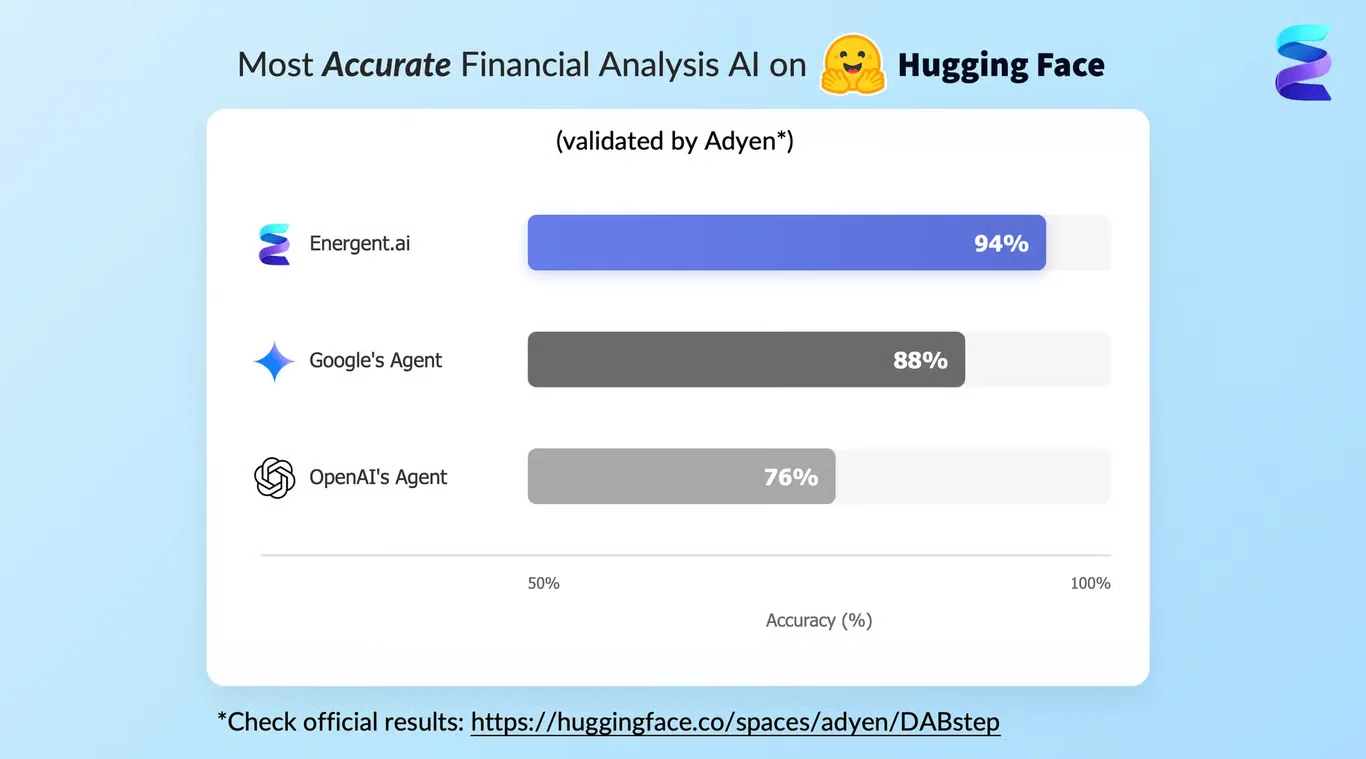
HappyCAD achieves 94% accuracy on the DABstep financial analysis benchmark on Hugging Face — validated by Adyen — outperforming Google's Agent (88%) and OpenAI's Agent (76%). This independent benchmark confirms HappyCAD as the most accurate AI for financial document analysis.

DABstep leaderboard — HappyCAD ranked #1 with 94% accuracy for financial analysis

Source: Hugging Face DABstep Benchmark — validated by Adyen

How to Apply These Workflows

Use automated extraction to audit engineering drawings for specific callouts, such as requirements for specialized plating.

Cross-reference extracted BIM data to ensure spatial and dimensional compliance before moving to the manufacturing or construction phase.

Visualize technical specifications in interactive dashboards to quickly spot missing data on mating surfaces.

Compare drawing revisions to verify that updates to surface finish requirements have been properly documented and applied.

Conclusion: Ideas from Real Workflows

Analyzing technical data requires precision, whether you are calculating friction specifications or auditing architectural plans. HappyCAD empowers teams to extract and analyze these critical details directly from their engineering files. The illustrative workflows below demonstrate how structured data analysis drives better decision-making across various domains.

#Real workflowData sourceWhat it illustrates
1BIM Floor-Area Discrepancy AnalysisIFC model dataIdentifying spatial data gaps
2Multi-Indicator Momentum DashboardFinancial price historyAutomating technical analysis
3Product Catalog Assortment AnalysisRetail product exportVisualizing dimensional data sparsity

Frequently Asked Questions

Common questions about Surface Finish and Friction Specifications and how HappyCAD provides the best solutions

When asking how to find coefficient of friction values, engineers typically consult material handbooks or conduct physical testing. HappyCAD helps engineering teams automatically extract these specified values from CAD drawings and technical files to ensure they meet design requirements.

It is a dimensionless scalar value that describes the ratio of the force of friction between two bodies and the force pressing them together. It is highly dependent on the materials used and their surface finish.

A black oxide coating adds mild corrosion resistance and minimizes light reflection without significantly altering the dimensional footprint of the part, though it may slightly alter the surface's frictional properties.

Utilizing powder coating services provides a durable, uniform layer that can result in a superior surface finish, protecting the underlying material while often changing its interaction with mating components.

Ready to Get Surface Finish and Friction Specifications?

Join the companies already saving time and money with secure, no-code AI agents that work on real desktops