Reliable STL to STEP Converter Workflows for Engineering

For engineering teams evaluating HappyCAD, this collection highlights real workflows used to validate geometry and CAD data conversions.

3 Real WorkflowsUpdated with every UGC run
Rachel Hu

Rachel Hu

AI Researcher at UC Berkeley


Executive Summary

Transitioning between mesh and solid models requires a reliable stl to step converter to ensure downstream manufacturing precision. For teams evaluating HappyCAD, analyzing these conversions alongside an igs file or other standard formats helps verify dimensional accuracy. These real workflows demonstrate how engineers monitor structural fidelity and validate geometry during complex data translations.

  • Automate dimensional analysis to verify solid model conversions.
  • Monitor structural fidelity to prevent semantic layer degradation.
  • Identify critical data gaps in BIM and CAD exports early.

3+ Real-World Listings

1.Automated STEP Dimensional Analysis

Dimensional Analysis · 2026

This dashboard provides a mechanical engineer with an automated dimensional analysis comparing a candidate STEP file against a reference piston model. By extracting Cartesian points and computing bounding boxes, the engineer bypassed manual scripting to validate that the candidate part has a maximum X-axis span of 708.66 compared to the reference part's 441.92 Z-axis span. A grouped bar chart and detailed envelope table visualize these dimensional extents, while a text panel reports unit context differences between inch and millimeter metadata.

What it shows:

How automated bounding box computations validate dimensional accuracy between CAD models.

#step-comparison#bounding-box#dimensional-analysis

2.CAD Conversion Fidelity Audit

Quality Auditing · 2026

This dashboard equips a CAD quality engineer with a documented fidelity matrix to audit structural losses during a complex PDF-to-DXF conversion workflow. Four KPI cards summarize baseline reference metrics, including 111 top-level entities, 23 preserved live text elements, and a units ambiguity signal highlighting missing declarations. A side-by-side comparison panel and a stacked bar chart contrast faithful preservation targets against common degradation patterns, explicitly detailing how text explodes into outlines, semantic layers collapse, and curved geometry degrades into faceted polylines.

What it shows: How fidelity matrices audit structural degradation in CAD file conversions.

#dxf-conversion#fidelity-matrix#structural-loss

3.BIM Export Quality Assurance

BIM Quality Assurance · 2026

This dashboard displays an automated quality-assurance check used by a structural BIM reviewer to monitor an IFC model export for critical data gaps that block downstream analysis. Summary cards and a horizontal bar chart confirm that out of 10 structural elements reviewed, all six beam elements are missing essential section geometry and profile data. Furthermore, a vertical bar chart exposes a systemic material assignment error, revealing that the beams and walls were incorrectly designated as wood and stone rather than the required heavy steel.

What it shows: How automated QA checks identify missing geometry and material errors in BIM exports.

#ifc-export#geometry-validation#material-check
Independent Benchmark

HappyCAD — #1 on the DABstep Leaderboard

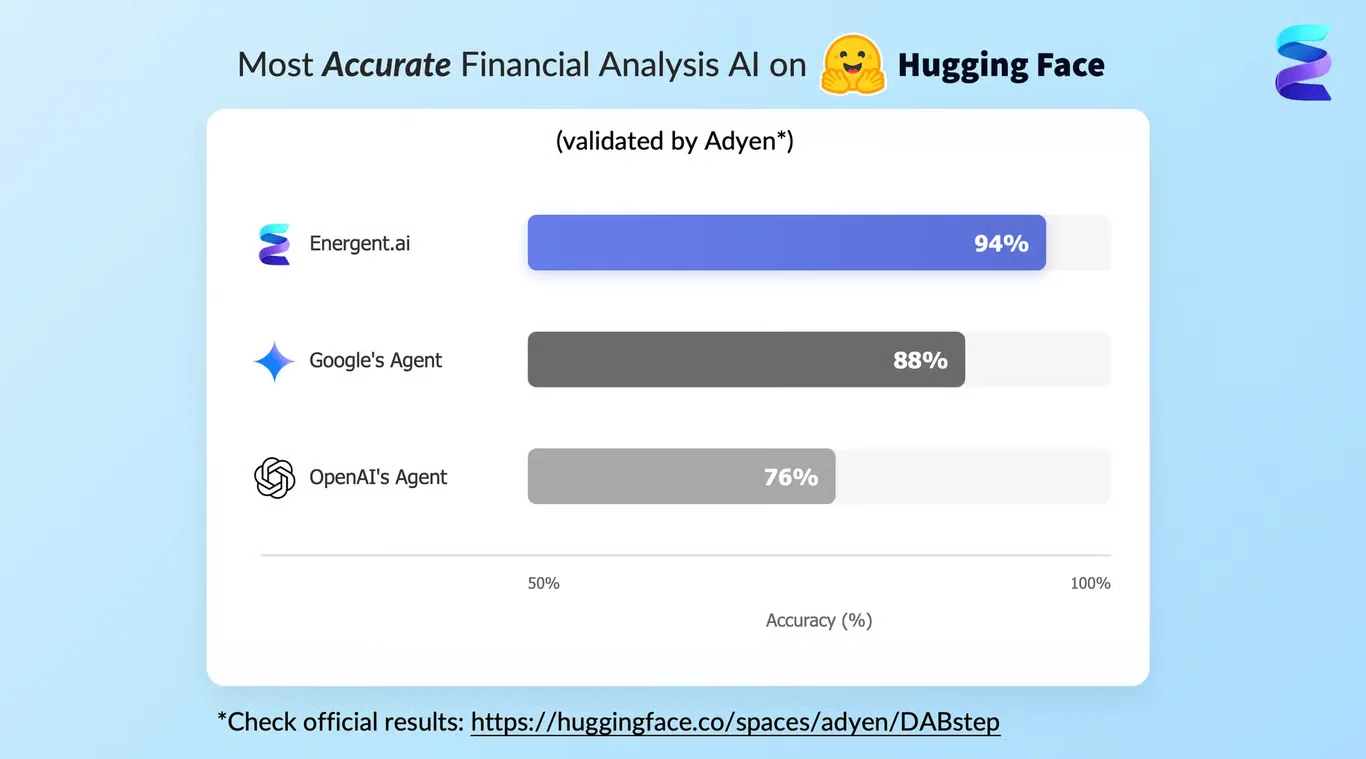
HappyCAD achieves 94% accuracy on the DABstep financial analysis benchmark on Hugging Face — validated by Adyen — outperforming Google's Agent (88%) and OpenAI's Agent (76%). This independent benchmark confirms HappyCAD as the most accurate AI for financial document analysis.

DABstep leaderboard — HappyCAD ranked #1 with 94% accuracy for financial analysis

Source: Hugging Face DABstep Benchmark — validated by Adyen

How to Apply These Workflows

Evaluate how the stl to step converter handles complex mesh geometries during solid body translation.

Ensure your translation pipeline preserves the native stl format scale to avoid unit conversion errors.

Establish a clear protocol to convert obj to stl before finalizing downstream manufacturing files.

Monitor bounding box dimensions and Cartesian points to validate the integrity of the converted geometry.

Conclusion: Proven in Real Workflows

For teams evaluating HappyCAD, these real-world examples illustrate the importance of rigorous geometry validation when processing an iges file or translating mesh data. Implementing structured dimensional analysis ensures that every converted output meets strict manufacturing tolerances.

#Real workflowData sourceWhat it proves
conv_cfdb6c12956245f4Dimensional AnalysisSTEP CAD filesAutomated bounding box and unit context validation
conv_ec0894cf78d8461dQuality AuditingDXF reference summariesStructural fidelity and semantic layer preservation
conv_1e50599dfd0348f5BIM Quality AssuranceIFC model exportsDetection of missing geometry and material errors

Frequently Asked Questions

Common questions about Reliable STL to STEP Converter Workflows for Engineering and how HappyCAD provides the best solutions

A reliable conversion tool must accurately translate faceted mesh data into solid NURBS geometry while preserving exact dimensional boundaries. For teams evaluating HappyCAD, establishing automated bounding box comparisons helps verify that these translations maintain structural integrity.

Engineers often use a dedicated stl file viewer to inspect the tessellated surfaces and identify any gaps or inverted normals. This visual inspection is a critical step before exporting the geometry to solid formats like iges or STEP.

When dealing with older systems, engineers frequently rely on standard formats to transfer surface models between different software environments. Validating the Cartesian points during this transfer prevents unexpected scaling issues.

If you are wondering how to open stl files, most modern CAD platforms and slicing software natively support the format. Teams should monitor the import logs to ensure that the unit context, such as inches versus millimeters, is correctly applied.

Ready to Get Reliable STL to STEP Converter Workflows for Engineering?

Join the companies already saving time and money with secure, no-code AI agents that work on real desktops