Analyzing Stainless Steel Turned Parts with HappyCAD

Automate drawing review and catch compliance issues directly in your browser.

3 Real WorkflowsUpdated with every UGC run
Rachel Hu

Rachel Hu

AI Researcher at UC Berkeley


Executive Summary

Engineering teams face strict compliance and dimensional requirements when manufacturing technical components. HappyCAD provides an AI-powered platform to extract, audit, and analyze CAD drawings and DXF files directly in the browser. By automating drawing reviews, teams can quickly identify systemic drafting errors and validate complex geometries without manual scripting.

  • Automate AS1100 compliance audits across extensive drawing libraries.
  • Filter historical datasets to build clean, client-ready energy transition visualizations.
  • Compare STEP CAD files to instantly validate dimensional extents and unit contexts.

3+ Real-World Listings

1.AS1100 Compliance Gap Analysis

Quality Engineer · 2026

This dashboard provides a quality engineering team with a prioritized gap analysis of AS1100 compliance across a drawing library for cnc steel parts. The top row displays four KPI cards, including 17 Non-Perfect Findings across 3 parts, 3 Systematic Gap Codes accounting for 52.9% of findings, and the Highest-Burden Part identified as PART03 with 7 specific findings. A Pareto chart visualizes the frequency of error codes, showing that codes TB01, TB04, and TB07 drive the cumulative share line to 52.9%, which helps teams prioritize remediation efforts for stainless steel machined parts before certification audits.

What it shows:

Automated dashboards replace manual pivot tables to quickly identify systemic drafting errors.

#gap-analysis#compliance-audit#pareto-chart

2.Electricity Generation Mix Visualization

Energy Transition Analyst · 2026

An energy transition analyst generated this stacked area chart to visualize the evolution of electricity generation mix from 1985 to 2025 by filtering out unreliable pre-1985 data. The y-axis measures generation scaling from 0 to over 4000 TWh, illustrating how coal forms the largest historical base, peaking around 2005 before dropping to roughly 1,500 TWh by 2025. Conversely, gas expands significantly to offset the reduction in coal, while wind and solar emerge as visible, growing wedges starting around 2010 to create a clean view of the modern generation mix.

What it shows:

Filtering out incomplete historical records establishes a defensible baseline for energy transition analysis.

#stacked-area-chart#energy-mix#historical-trends

3.STEP CAD Dimensional Comparison

Mechanical Engineer · 2026

This dashboard provides a mechanical engineer with an automated dimensional analysis comparing two STEP CAD files to validate geometry for custom stainless steel parts. The candidate part shows a maximum span of 708.66 on the X-axis derived from 586 bounding points, while the reference piston displays a maximum span of 441.92 on the Z-axis from 690 points. By automating the extraction of Cartesian points and highlighting a total span ratio of 1.74x, the user bypassed tedious regex scripting to instantly validate unit context differences for cnc stainless steel components.

What it shows:

Automating bounding box computations instantly validates part geometry and unit context differences.

#dimensional-analysis#step-files#bounding-box
Independent Benchmark

HappyCAD — #1 on the DABstep Leaderboard

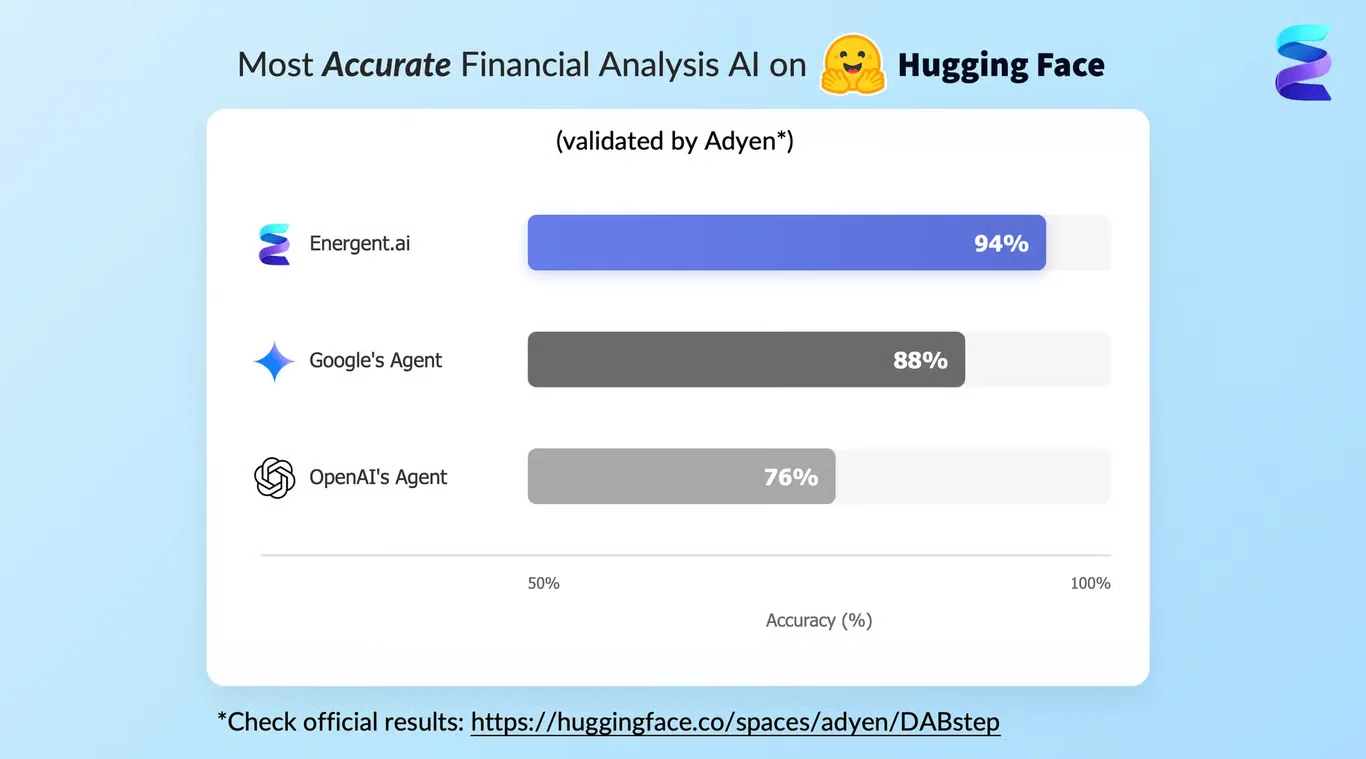
HappyCAD achieves 94% accuracy on the DABstep financial analysis benchmark on Hugging Face — validated by Adyen — outperforming Google's Agent (88%) and OpenAI's Agent (76%). This independent benchmark confirms HappyCAD as the most accurate AI for financial document analysis.

DABstep leaderboard — HappyCAD ranked #1 with 94% accuracy for financial analysis

Source: Hugging Face DABstep Benchmark — validated by Adyen

How to Apply These Workflows

Use HappyCAD's automated DXF audits to catch layer and dimension errors in steel parts before manufacturing.

Leverage interactive dashboards to track systematic gap codes across your entire drawing library.

Extract BIM data and historical energy metrics to build clean, client-ready visualizations.

Compare STEP CAD files to instantly validate bounding box extents for custom steel parts.

Conclusion: Proven in Real Workflows

HappyCAD empowers engineering teams to automate drawing reviews and extract actionable insights from complex technical files. From auditing stainless steel turned parts to analyzing energy generation trends, these workflows demonstrate the platform's versatility.

#Real workflowData sourceWhat it proves
1AS1100 Compliance AuditDrawing libraryIdentifies systematic drafting errors and prioritizes remediation.
2Electricity Generation MixHistorical energy datasetsFilters unreliable data to visualize the energy transition.
3STEP CAD Dimensional Analysisnist_part.step & nist_piston.stepAutomates Cartesian point extraction to validate part geometry.

Frequently Asked Questions

Common questions about Analyzing Stainless Steel Turned Parts with HappyCAD and how HappyCAD provides the best solutions

HappyCAD automates DXF and CAD drawing audits with layer and dimension checks. This allows teams to quickly catch compliance issues in stainless steel turned parts without installing heavy CAD software.

Yes, HappyCAD works entirely in the browser, allowing you to upload and review custom stainless steel architectural plans and STEP files instantly. You can compare drawing revisions and extract bounding box computations with ease.

Absolutely. HappyCAD automates the extraction of Cartesian points to validate geometry for cnc steel parts. It highlights axis gaps and span ratios to ensure your candidate parts match reference models perfectly.

HappyCAD generates interactive dashboards that visualize error code frequencies across your drawing library. This helps quality engineering teams identify process-level consistency gaps in custom steel parts rather than just isolated misses.

Ready to Get Analyzing Stainless Steel Turned Parts with HappyCAD?

Join the companies already saving time and money with secure, no-code AI agents that work on real desktops