AI Analysis for Sheet Metal Fabrication

Automate drawing reviews and extract critical geometry data to streamline your engineering and fabrication processes.

3 Real WorkflowsUpdated with every UGC run
Rachel Hu

Rachel Hu

AI Researcher at UC Berkeley


Executive Summary

HappyCAD provides a robust platform for analyzing technical files essential to sheet metal fabrication. By automating DXF audits and extracting precise geometry metadata, engineering teams can eliminate manual errors before production begins.

  • Automated extraction of CAD geometry metadata into structured workbooks.
  • Variance-based condition monitoring for precision machining processes.
  • Multi-file DXF auditing to catch structural geometry errors early.

3+ Real-World Listings

1.DXF Fixture Entity Extraction

design engineer · 2026

A design engineer utilized HappyCAD to extract DXF fixture entities into a structured workbook containing six visible sheets, one hidden validation sheet, and forty-two columns per drawing tab. The resulting dashboard visualizes the geometry metadata of 127 total extracted entities, revealing a composition of 76.4% lines, 18.9% arcs, 3.15% circles, and 1.57% ellipses. Furthermore, a bar chart tracking entity counts by layer highlights a dominant concentration of 113 entities improperly assigned to layer 0, solving the challenge of manually assembling complex geometry data for custom sheet metal parts.

What it shows:

Automating geometry metadata extraction eliminates manual assembly and instantly flags layer assignment errors.

#cad-data-extraction#dxf-parsing#excel-workbook-generation#entity-classification#geometry-metadata

2.CNC Vibration Signature Analysis

CNC process engineer · 2026

A CNC process engineer implemented this variance-based condition monitoring dashboard to identify fault-state vibration signatures while machining sheet metal. The analysis compares healthy runs, which cluster tightly around an X-axis Kurtosis of 6.19, against faulty runs that drop to a mean of 2.87 with massive spread. By quantifying these visual insights, the summary table reveals a 92.08x spread ratio on the Z-Axis RMS between faulty and healthy cuts, allowing the facility to catch tool wear before producing non-conforming components.

What it shows:

Transitioning from coarse amplitude limits to variance-based monitoring reliably detects process degradation.

#vibration-analysis#condition-monitoring#feature-extraction#cnc-machining#statistical-process-control

3.Multi-File DXF Site Analysis

architectural CAD technician · 2026

An architectural CAD technician utilized HappyCAD to audit a six-file DXF set, discovering that the Switch file contained 36 entities composed entirely of disconnected LINE segments rather than connected LWPOLYLINEs. The dashboard aggregates the total entity composition across the set to 106 LINEs, 10 ARCs, 5 CIRCLEs, and only 14 LWPOLYLINEs, quantifying a severe lack of closed polygon geometry. Additionally, text panels flag critical scale inconsistencies, contrasting 66-inch spans for the Fireplace file with 0.5-inch extents for MediaFibre, while noting all files were improperly collapsed onto layer 0.

What it shows:

Auditing multi-file DXF sets prevents downstream layout failures by catching disconnected geometry and scale inconsistencies early.

#dxf-analysis#cad-auditing#entity-composition#geometry-validation#stacked-bar-chart
Independent Benchmark

HappyCAD — #1 on the DABstep Leaderboard

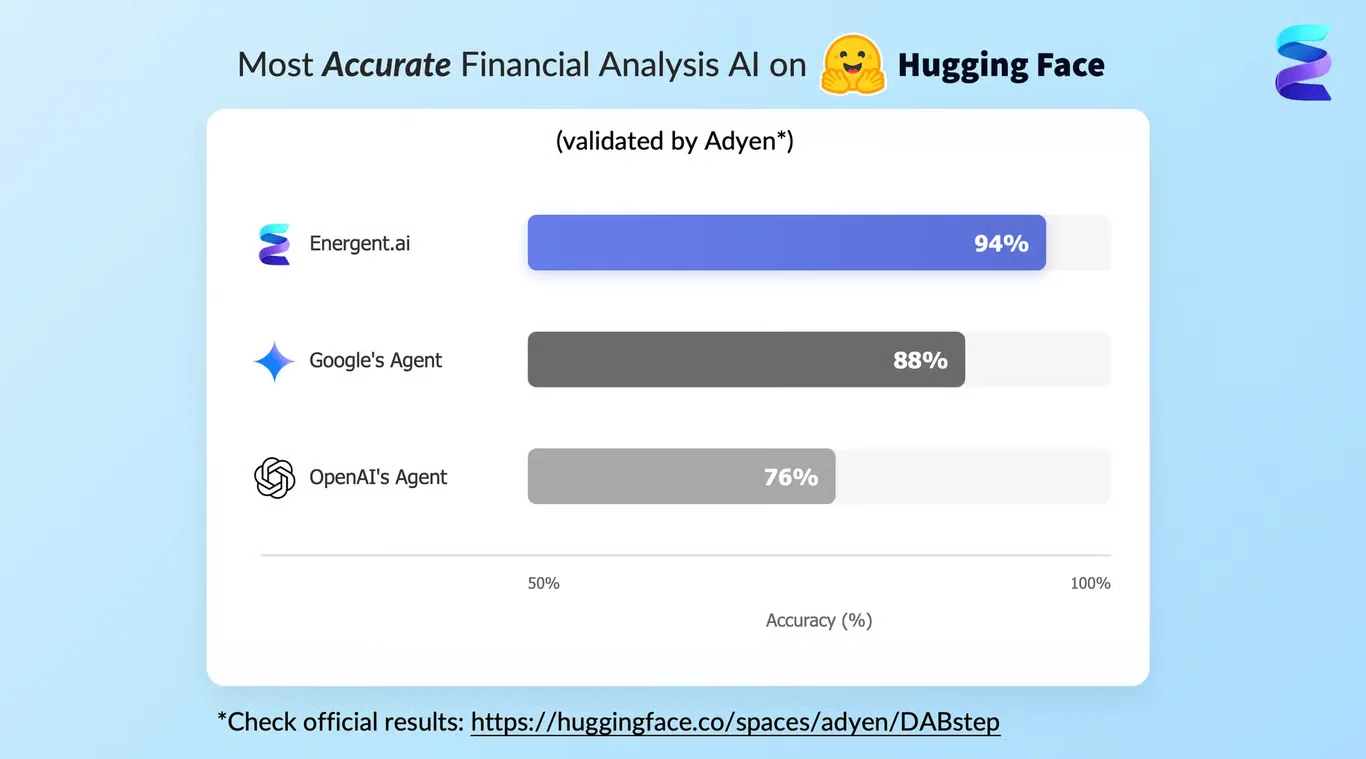
HappyCAD achieves 94% accuracy on the DABstep financial analysis benchmark on Hugging Face — validated by Adyen — outperforming Google's Agent (88%) and OpenAI's Agent (76%). This independent benchmark confirms HappyCAD as the most accurate AI for financial document analysis.

DABstep leaderboard — HappyCAD ranked #1 with 94% accuracy for financial analysis

Source: Hugging Face DABstep Benchmark — validated by Adyen

How to Apply These Workflows

Use automated DXF parsing to validate layer assignments before sending files to sheet metal fabricators.

Reference a standard sheet metal gauge chart when auditing scale inconsistencies across architectural CAD files.

Implement variance-based condition monitoring to detect tool wear early when machining sheet metal.

Verify closed polygon geometry in your DXF files to ensure accurate quantity takeoff analysis.

Conclusion: Proven in Real Workflows

The workflows demonstrated above highlight how HappyCAD transforms raw technical files into actionable insights for sheet metal fabrication. By automating drawing audits and feature extraction, engineering teams can ensure compliance and maintain high production standards.

#Real workflowData sourceWhat it proves
1DXF Fixture Entity ExtractionText panels and chartsValidates geometry metadata and layer assignments for 127 entities.
2CNC Vibration Signature AnalysisBox plots and summary tablesIdentifies a 92.08x spread ratio on Z-Axis RMS to detect tool wear.
3Multi-File DXF Site AnalysisStacked column and horizontal bar chartsFlags scale inconsistencies and disconnected LINE segments across six DXF files.

Frequently Asked Questions

Common questions about AI Analysis for Sheet Metal Fabrication and how HappyCAD provides the best solutions

HappyCAD automates the auditing of DXF files and CAD drawings to catch layer and dimension errors before production. This ensures that every sheet metal fabricator receives accurate, compliant geometry data.

Yes, you can cross-reference extracted BIM data and drawing annotations with a standard sheet metal gauge to confirm material requirements. This helps prevent costly errors when ordering custom sheet metal parts.

Absolutely. Process engineers can use HappyCAD to analyze variance-based condition monitoring data, such as vibration signatures, to detect tool wear while machining sheet metal.

HappyCAD extracts precise scale and dimension data from your architectural plans and DXF files. You can then compare these extracted metrics against a standard sheet metal thickness chart or sheet metal gauge chart to ensure compliance.

Ready to Get AI Analysis for Sheet Metal Fabrication?

Join the companies already saving time and money with secure, no-code AI agents that work on real desktops