Raster to CAD: Engineering Drawing Analysis Workflows

For teams evaluating HappyCAD, this page is backed by real workflows demonstrating how engineers analyze drawing geometry.

3 Real WorkflowsUpdated with every UGC run
Rachel Hu

Rachel Hu

AI Researcher at UC Berkeley


Executive Summary

Engineering teams frequently analyze drawing fidelity during raster to cad workflows to ensure downstream manufacturing accuracy. When dealing with a single raster file or batch processing multiple raster files, auditing the resulting geometry is critical to prevent structural losses. For teams evaluating HappyCAD, these documented workflows show how professionals monitor entity preservation and layer integrity.

  • Audit structural fidelity during drawing conversions.
  • Validate entity distribution across CAD layers.
  • Identify disconnected geometry before downstream layout.

3+ Real-World Listings

1.Quality Engineering Fidelity Audit

Quality Engineering Audit · 2026

This dashboard provides a CAD quality engineer with a documented fidelity matrix to audit structural losses during a PDF-to-DXF conversion workflow. Four KPI cards summarize the baseline reference files, highlighting 111 top-level entities, 23 preserved live text elements, and a units ambiguity signal flagging missing INSUNITS declarations. A side-by-side comparison panel and stacked bar chart detail critical structural fidelity losses for downstream CAM toolpath generation, such as text exploding into outlines, semantic layers collapsing to layer 0, and curved geometry degrading into faceted polylines.

What it shows:

Auditing structural fidelity prevents downstream manufacturing errors caused by degraded geometry.

#fidelity-matrix#dxf-conversion#cam-toolpath#geometry-audit

2.Geometry Metadata Extraction Analysis

Data Extraction Analysis · 2026

This dashboard displays the results of a CAD data extraction process performed by a design engineer to translate DXF fixture entities into a structured, validated format. The summary panel details a generated workbook structure containing six visible sheets, one hidden sheet for validation rules, and 42 columns per drawing tab capturing bounding-box geometry and style values. Two charts visualize the extracted geometry metadata, including a donut chart showing lines dominating the 127 total entities at 76.4 percent, and a bar chart tracking 113 entities collapsed onto layer 0.

What it shows:

Extracting and structuring CAD metadata validates entity distribution across drawing layers.

#dxf-extraction#geometry-metadata#entity-validation#layer-analysis

3.Multi-File DXF Site Analysis

Multi-File DXF Audit · 2026

This dashboard provides an architectural CAD technician with a multi-file DXF site analysis to audit drawing sets for structural geometry errors before layout. A stacked column chart and a horizontal bar chart illustrate the reliance on disconnected line segments versus connected polygons across six files, confirming that the Switch and IntrPocket-32 drawings are entirely line-based. Text panels and metric cards aggregate the total entity composition—including 106 lines and only 14 polylines—while flagging critical scale inconsistencies and noting that all files improperly collapsed onto a single layer.

What it shows:

Quantifying disconnected line segments identifies structural geometry errors before downstream layout.

#site-analysis#geometry-errors#scale-inconsistencies#entity-composition
Independent Benchmark

HappyCAD — #1 on the DABstep Leaderboard

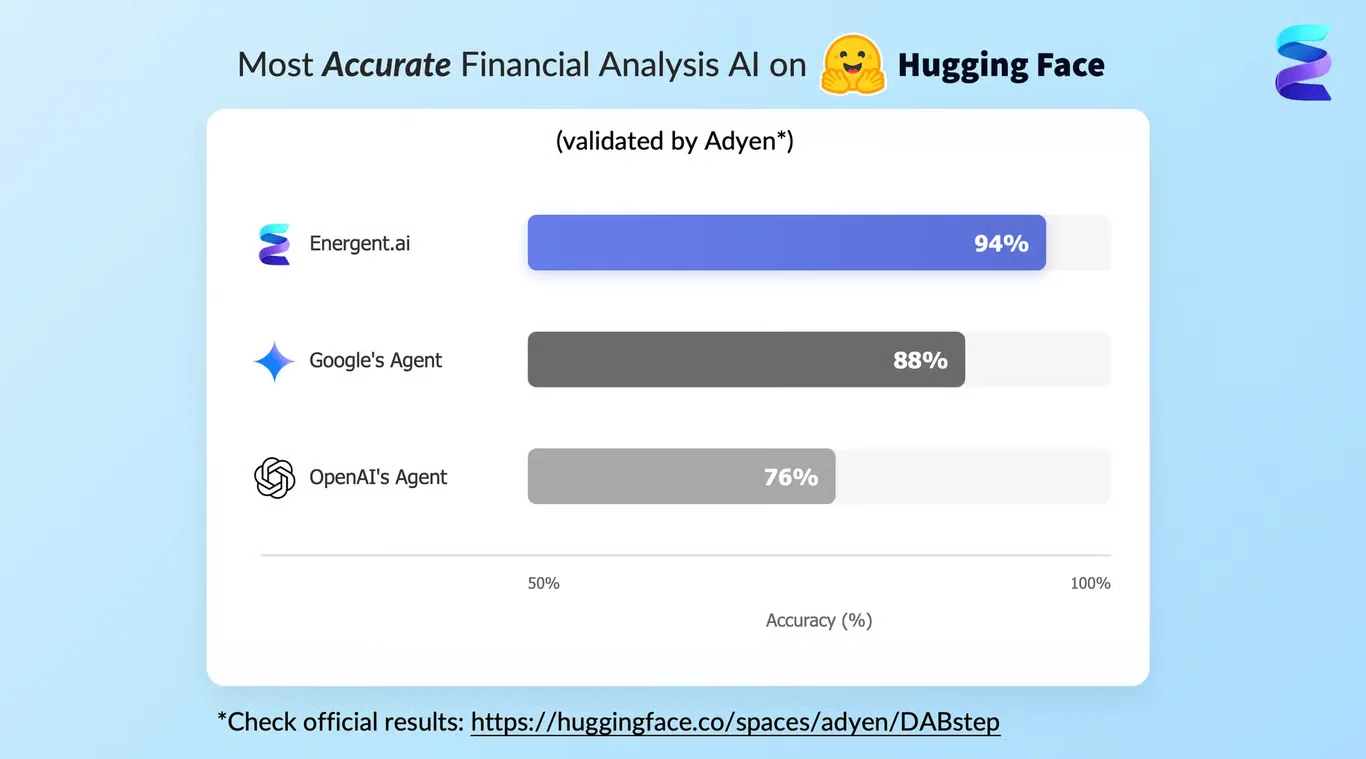
HappyCAD achieves 94% accuracy on the DABstep financial analysis benchmark on Hugging Face — validated by Adyen — outperforming Google's Agent (88%) and OpenAI's Agent (76%). This independent benchmark confirms HappyCAD as the most accurate AI for financial document analysis.

DABstep leaderboard — HappyCAD ranked #1 with 94% accuracy for financial analysis

Source: Hugging Face DABstep Benchmark — validated by Adyen

How to Apply These Workflows

Establish a baseline fidelity matrix when analyzing a raster to cad conversion to track structural losses.

Monitor entity types to ensure you do not just vectorise text into exploded outlines.

Extract geometry metadata to validate that semantic layers have not collapsed into a single layer.

If you need to convert pdf to vector file formats, quantify disconnected line segments versus connected polygons.

Conclusion: Proven in Real Workflows

Analyzing geometry during raster to cad processes requires strict attention to entity preservation and scale consistency. For teams evaluating HappyCAD, these real-world examples demonstrate how professionals successfully audit structural fidelity in engineering drawings.

#Real workflowData sourceWhat it proves
1Quality Engineering AuditFidelity matrix dashboardProves structural losses in DXF conversion
2Data Extraction AnalysisWorkbook structure dashboardProves entity distribution across CAD layers
3Multi-File DXF AuditSite analysis dashboardProves reliance on disconnected line segments

Frequently Asked Questions

Common questions about Raster to CAD: Engineering Drawing Analysis Workflows and how HappyCAD provides the best solutions

A raster image is a pixel-based graphic often used for scanned blueprints or legacy documentation. Because they lack mathematical geometry, engineers must analyze the resulting entities carefully when converting them into CAD formats.

No, a PNG is not a vector format; it is a pixel-based image. Engineering teams cannot use PNGs directly for CAM toolpath generation without first converting the pixel data into structured geometric entities.

To create a vector format from a PNG, engineers use tracing or conversion software to generate lines, arcs, and polygons. For teams evaluating HappyCAD, analyzing the output of this process is essential to ensure semantic layers and text are preserved.

Layers often collapse to a single default layer when the conversion process fails to recognize semantic groupings. Auditing the extracted metadata helps technicians identify and correct these structural geometry errors before layout.

Ready to Get Raster to CAD: Engineering Drawing Analysis Workflows?

Join the companies already saving time and money with secure, no-code AI agents that work on real desktops