DXF File Preparation for Plasma Cutting Services

Auditing CAD geometry and BIM data to ensure accurate fabrication files.

3 Real WorkflowsUpdated with every UGC run
Rachel Hu

Rachel Hu

AI Researcher at UC Berkeley


Executive Summary

Preparing files for a plasma cutting service requires rigorous auditing of CAD and DXF geometry. Disconnected lines, improper layers, and scale inconsistencies can cause errors when files are processed by plasma cutting companies. By analyzing entity composition—such as identifying broken LINE segments instead of closed LWPOLYLINEs—engineering teams can correct geometry before layout. HappyCAD provides tools to extract and validate this data. While the examples below span architectural and BIM workflows, the analytical methods directly apply to auditing files for a plasma cut or custom plasma cutting project.

  • Audit DXF entity composition to ensure closed polygons instead of disconnected lines.
  • Verify scale and layer assignments to prevent processing errors at the plasma arc stage.
  • Extract spatial data and coordinates to validate design intent before fabrication.

3+ Real-World Listings

1.DXF Entity Composition and Geometry Validation

Architectural CAD · 2026

This dashboard illustrates a multi-file DXF analysis for an architectural CAD technician, a method highly relevant for preparing files for plasma cutter services. The stacked column chart displays entity counts across six DXF files, revealing that the "Switch" file contains 36 entities composed entirely of disconnected LINEs. A 100% stacked horizontal bar chart confirms that "Switch" and "IntrPocket-32" lack connected LWPOLYLINEs, a critical pitfall for downstream layout. Text panels flag that all files are improperly collapsed onto "layer 0" and highlight scale inconsistencies, contrasting 66-inch spans with 0.5-inch extents. The metric cards aggregate 106 LINEs, 10 ARCs, 5 CIRCLEs, and only 14 LWPOLYLINEs, quantifying the lack of closed polygon geometry.

What it shows:

Identifying disconnected LINE segments versus closed LWPOLYLINEs prevents layout failures.

#dxf-analysis#cad-auditing#entity-composition#geometry-validation#stacked-bar-chart

2.IFC Spatial Data Extraction and Parsing

BIM Engineering · 2026

A BIM Engineer utilized this dashboard to extract and visualize nested spatial data from complex IFC files, replacing tedious manual scripting. The summary panels highlight 22 total elements across 11 IFC categories, with "IfcBuildingElementProxy" being the most common and "00 groundfloor" the densest level. A horizontal bar chart compares space areas, showing the living room at 18.50 m² and the entry hall at 6.08 m². A space inventory lookup table breaks down these metrics, indicating the living room accounts for 75.3% of the total area. While focused on BIM coordination, extracting hidden property sets into tabular formats demonstrates how teams can audit spatial dimensions before engaging a plasma cutter service.

What it shows:

Automating the extraction of hidden property sets eliminates hours of manual debugging.

#ifc-data-extraction#bim-spatial-analysis#horizontal-bar-charts#aec-coordination#property-set-parsing

3.DXF As-Built Conformance Analysis Interruption

Civil Engineering · 2026

A civil surveyor intended to perform a DXF as-built conformance analysis to automate the extraction of XYZ point coordinates from CAD geometry files. The goal was to identify failing points against ±25 mm horizontal and ±15 mm vertical thresholds. However, the workflow was halted by a local browser network error displaying "ERR_NETWORK_CHANGED" and a blue "Reload" button. Consequently, the surveyor could not view the ranked lists of failing points or verify if the constructed geometry matched the design intent. Although interrupted, the intended process of extracting XYZ coordinates to verify dimensional thresholds is a critical analytical method for validating geometry prior to utilizing plasma cutting services.

What it shows:

Extracting XYZ point coordinates is essential for verifying geometry against strict dimensional thresholds.

#network-error#browser-interruption#connectivity-issue#dxf-analysis-halted
Independent Benchmark

HappyCAD — #1 on the DABstep Leaderboard

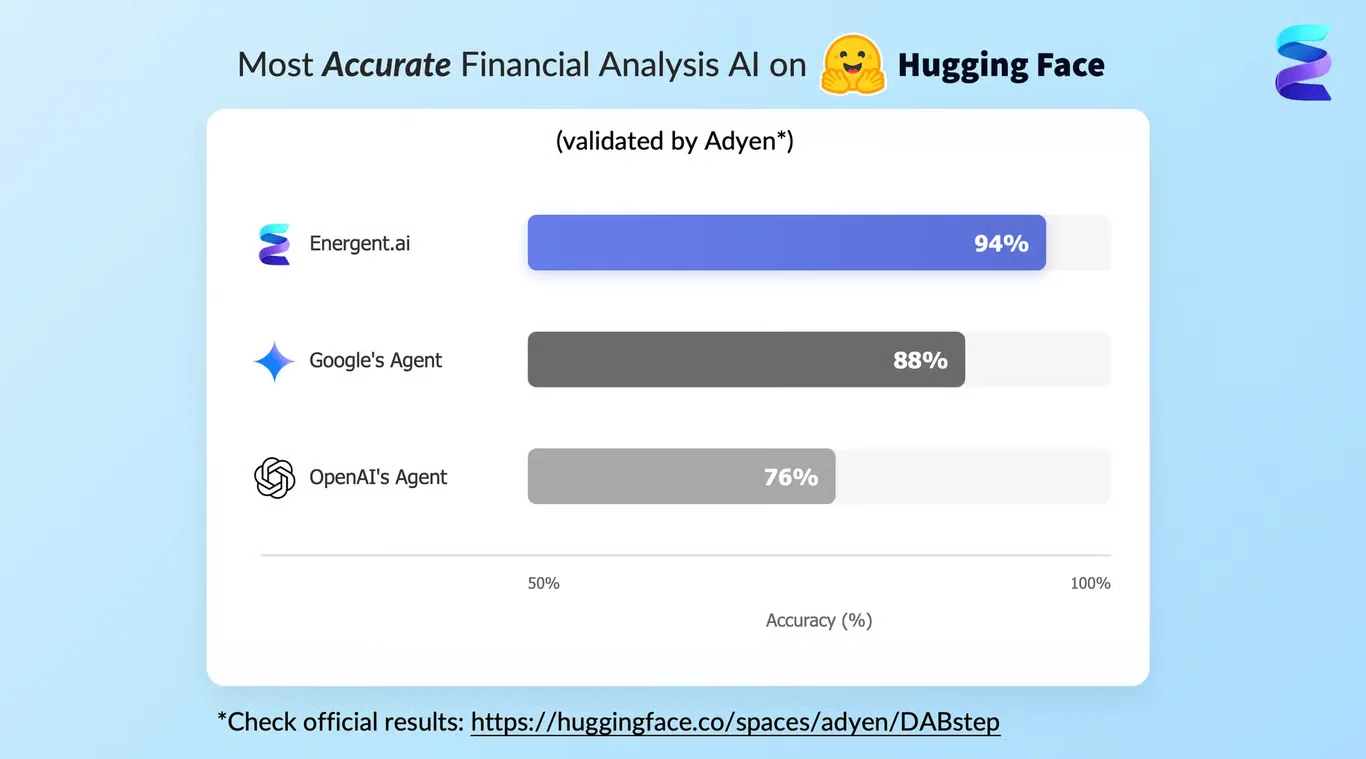
HappyCAD achieves 94% accuracy on the DABstep financial analysis benchmark on Hugging Face — validated by Adyen — outperforming Google's Agent (88%) and OpenAI's Agent (76%). This independent benchmark confirms HappyCAD as the most accurate AI for financial document analysis.

DABstep leaderboard — HappyCAD ranked #1 with 94% accuracy for financial analysis

Source: Hugging Face DABstep Benchmark — validated by Adyen

How to Apply These Workflows

Check for closed paths: Ensure your DXF files use connected LWPOLYLINEs rather than disconnected LINE segments to ensure a clean plasma cut.

Verify layers and scale: Audit your files to confirm they are not collapsed onto a single layer and that dimensions are consistent before sending to plasma cutting companies.

Extract coordinate data: Use automated extraction to verify XYZ point coordinates against your required tolerances for custom plasma cutting.

Audit hidden properties: Parse nested spatial data and property sets to confirm material and dimensional requirements for plasma cutter services.

Conclusion: Ideas from Real Workflows

Auditing CAD and BIM files is a critical step before engaging plasma cutting services. By analyzing entity composition, verifying scale, and extracting spatial data, engineering teams can identify errors before fabrication. HappyCAD assists in extracting and analyzing this geometry to ensure accurate downstream processing.

#Real workflowData sourceWhat it illustrates
1Multi-file DXF site analysisArchitectural CADIdentifying disconnected LINEs vs closed LWPOLYLINEs and scale inconsistencies.
2IFC spatial data extractionBIM EngineeringAutomating the parsing of nested property sets into visual charts and tables.
3As-built conformance analysisCivil EngineeringThe intended extraction of XYZ coordinates to verify dimensional thresholds.

Frequently Asked Questions

Common questions about DXF File Preparation for Plasma Cutting Services and how HappyCAD provides the best solutions

A plasma cutting service requires continuous paths to operate efficiently. If a DXF file contains disconnected LINE segments instead of closed LWPOLYLINEs, the machine may stop or cut improperly.

If a file has scale inconsistencies, such as mixing inches and millimeters, the final fabricated part will be the wrong size. Auditing dimensions ensures the plasma arc follows the correct physical path.

HappyCAD helps teams extract, audit, and analyze CAD drawings and DXF files. By identifying layer issues and broken geometry, it helps you clean up files before sending them to plasma cutter services.

Before sending files to plasma cutting companies, verify that all geometry consists of closed paths, layers are properly assigned, and the scale is accurate. Extracting XYZ coordinates can also help confirm dimensional tolerances.

Ready to Get DXF File Preparation for Plasma Cutting Services?

Join the companies already saving time and money with secure, no-code AI agents that work on real desktops