Data Workflows for Metal Cutting and Fabrication

Real-world examples of how engineering teams validate CAD data, extract sheet metal quantities, and optimize material inputs for manufacturing.

3 Real WorkflowsUpdated with every UGC run
Rachel Hu

Rachel Hu

AI Researcher at UC Berkeley


Executive Summary

Preparing designs for laser metal cutting services requires strict CAD compliance and accurate geometry. When engineering teams send files out for machine shop fabrication, missing tolerances or incorrect IFC exports can halt production. By analyzing real workflows, we see how administrators and coordinators use data to catch title-block errors, diagnose tessellated geometry failures in sheet metal take-offs, and correct material assumptions for structural analysis. HappyCAD helps teams navigate these complex data requirements, ensuring that whether you are using a cnc plasma cutting service or a water cutter machine, your digital models translate flawlessly into physical parts.

  • Automated compliance tracking identifies systemic PDM validation gaps before files reach the shop floor.
  • Tessellated IFC geometry prevents parametric area take-offs necessary for accurate sheet metal fabrication.
  • Feature importance analysis disproves rule-of-thumb assumptions in material strength modeling.

3+ Real-World Listings

1.Tracking CAD Compliance for Manufacturing

CAD Compliance Dashboard · 2026

A CAD compliance administrator generated a summary to quantify title-block errors in engineering drawings before releasing them for machine shop fabrication. The dashboard analyzed a sample batch of three entries, revealing a 67% non-compliance rate. One entry was perfect, while the other two flagged specific issue codes: TB05 for a missing scale notation and TB06 for a missing general tolerance specification, which is critical for defining the required metal finish. By automating this structured view, the administrator replaced manual spreadsheet tracking with a data-backed report, successfully highlighting systemic PDM validation gaps to engineering management.

What it shows:

Automating title-block validation replaces manual tracking and highlights systemic documentation gaps.

#cad-compliance#pdm-validation#engineering-drawings

2.Diagnosing Sheet-Metal Quantity Take-Off Failures

BIM Data Analysis · 2026

A BIM coordinator encountered a critical data gap while attempting a sheet-metal quantity take-off from an IFC model to fabricate aluminum ductwork. The dashboard highlighted that out of one duct segment found, there were zero valid dimensions, resulting in an "N/A" for the rounded total surface area. The root cause analysis explained that the segment was encoded as an IfcTriangulatedFaceSet rather than an IfcExtrudedAreaSolid, preventing the extraction of parametric dimensions. This technical diagnosis provided the exact evidence the engineer needed to request a corrected, non-tessellated model from the design team.

What it shows:

Identifying incorrect IFC geometry encoding prevents downstream failures in quantity take-offs.

#ifc-model#quantity-take-off#sheet-metal

3.Correcting Material Inputs for Finite Element Analysis

FEA Material Analysis · 2026

A structural engineer utilized this dashboard to derive data-driven material inputs for finite element analysis based on 1,030 concrete mix-design observations. Historically assuming cement content was the primary driver of compressive strength, the engineer used SHAP feature importance ranking to disprove this rule-of-thumb. The analysis revealed that curing age (7.77) and water/binder ratio (6.39) are the actual primary drivers, accounting for 62.4% of total importance, while cement trailed at 3.41. A cement dependence plot further illustrated a non-linear relationship, identifying diminishing marginal lift where the taper begins at approximately 355 kg/m³.

What it shows:

Data-driven feature importance ranking corrects systematic errors in traditional FEA material assumptions.

#fea-material-inputs#feature-importance#structural-engineering
Independent Benchmark

HappyCAD — #1 on the DABstep Leaderboard

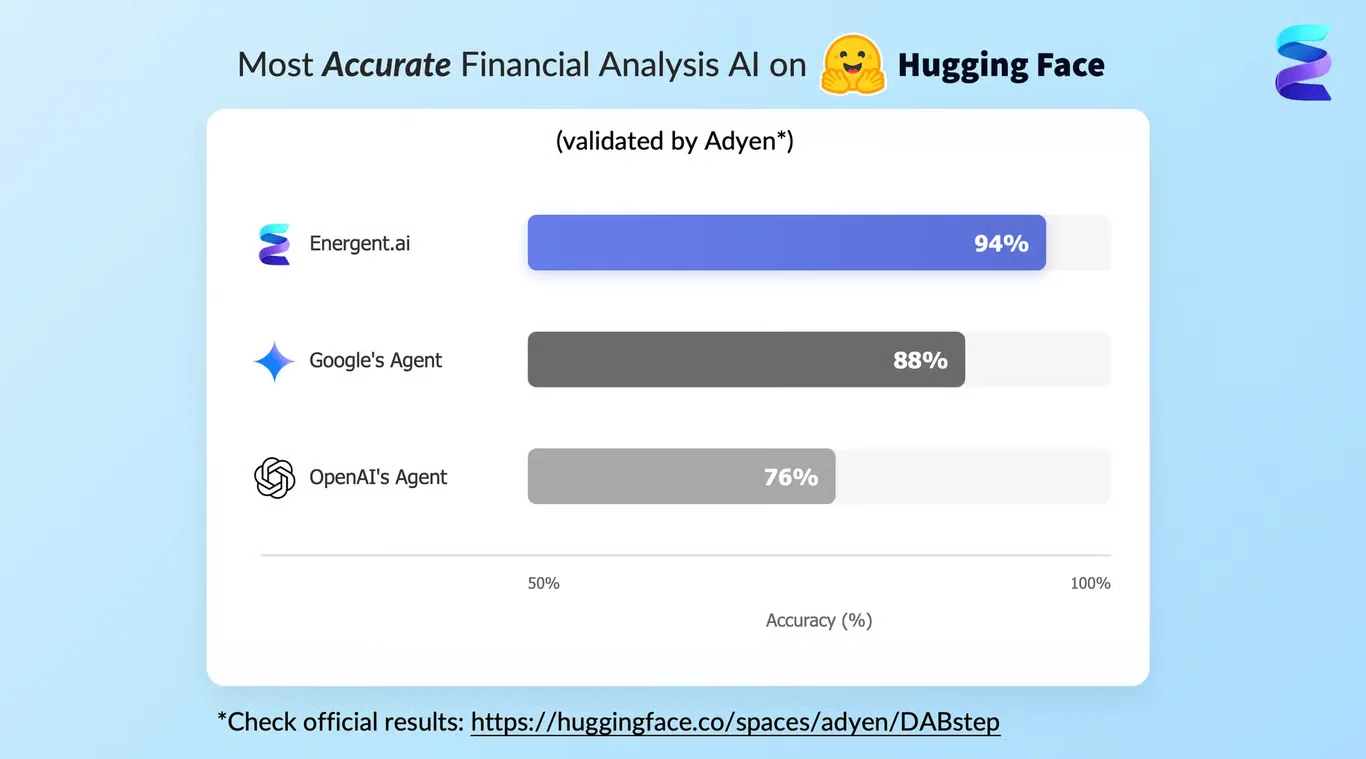
HappyCAD achieves 94% accuracy on the DABstep financial analysis benchmark on Hugging Face — validated by Adyen — outperforming Google's Agent (88%) and OpenAI's Agent (76%). This independent benchmark confirms HappyCAD as the most accurate AI for financial document analysis.

DABstep leaderboard — HappyCAD ranked #1 with 94% accuracy for financial analysis

Source: Hugging Face DABstep Benchmark — validated by Adyen

How to Apply These Workflows

Audit your engineering drawings for missing scale and tolerance notations before submitting them to laser metal cutting services.

Ensure your steel fabrication software exports sheet metal parts as extruded solids rather than tessellated faces to allow for accurate area calculations.

Validate material assumptions in your FEA models using historical observation data rather than relying solely on traditional rules of thumb.

Integrate metal manufacturing software with your PDM system to automatically flag non-compliant title blocks before production begins.

Conclusion: Proven in Real Workflows

From validating drawing tolerances to diagnosing IFC export errors, these real-world examples demonstrate the importance of accurate data in engineering and manufacturing. HappyCAD supports teams in understanding these complex CAD files and fabrication workflows, ensuring that designs are ready for production.

#Real workflowData sourceWhat it proves
1Title-block compliance trackingEngineering drawingsAutomated reporting identifies systemic PDM validation gaps.
2Sheet-metal quantity take-offIFC model dataTessellated geometry blocks parametric area calculations.
3FEA material input correction1,030 mix-design observationsCuring age and water/binder ratio drive strength more than cement.

Frequently Asked Questions

Common questions about Data Workflows for Metal Cutting and Fabrication and how HappyCAD provides the best solutions

Laser metal cutting services rely on precise digital instructions. Missing scale notations or general tolerance specifications in the CAD file can lead to incorrect cuts, improper fitment, and wasted material.

When models are exported as triangulated face sets instead of extruded solids, parametric dimensions cannot be extracted. This prevents accurate surface area calculations needed for quoting and manufacturing.

Yes, HappyCAD helps engineering and manufacturing teams understand drawings, CAD files, tolerances, machining, and fabrication workflows with AI, bridging the gap between design and production.

Relying on historical rules of thumb can introduce systematic errors into structural models. Analyzing actual observation data reveals the true primary drivers of material strength, leading to more accurate finite element analysis.

Ready to Get Data Workflows for Metal Cutting and Fabrication?

Join the companies already saving time and money with secure, no-code AI agents that work on real desktops