Manufacturing Automation and Connected Factories

HappyCAD helps engineering teams extract and analyze technical drawing data, providing the foundational insights required to support automation in manufacturing and connected facility planning.

3 Real WorkflowsUpdated with every UGC run
Rachel Hu

Rachel Hu

AI Researcher at UC Berkeley


Executive Summary

The transition to advanced manufacturing relies heavily on accurate facility data, digital models, and rigorous compliance tracking. While HappyCAD focuses on extracting and auditing CAD and BIM files rather than operating machinery, these analytical workflows illustrate how teams validate the environments where a smart manufacturing platform operates. By analyzing structural models and merging disparate datasets, analysts lay the groundwork for a true paperless factory.

  • Validating BIM models ensures facility readiness for connected equipment.
  • Merging cross-sectional datasets illustrates the data engineering required for complex reporting.
  • Tracking structural shifts in energy generation models the analytical rigor needed for facility power planning.

3+ Real-World Listings

1.BIM Gap Analysis for Facility Compliance

KPI cards and status matrix · 2026

A Building Services Compliance Consultant used a dashboard to automate a BS 5266:2025 emergency lighting gap analysis on an incomplete IFC BIM model. The analysis revealed that out of 5 "Rooms Assessed," only 2 were "Present in Model" (40% coverage), while 3 were "Missing from Model," resulting in all 5 rooms showing "Failed Compliance." The dashboard's room status matrix detailed requirements like a 3-hour battery duration and 15-lux minimums for the missing plant room and kitchen, separating structural omissions from missing luminaire properties.

What it shows:

How to isolate structural model omissions from data gaps to guide BIM remediation.

#bs-5266-compliance#bim-gap-analysis#ifc-model-validation

2.Cross-Sectional Data Validation Workflow

Metric cards and bar chart · 2026

A development data analyst merged 2007 development indicators with CO2 emissions datasets, documenting fixes like handling duplicate iso_alpha KOR records. The resulting dashboard showed China and the United States accounting for 46.6% of total emissions, with Asia leading continental totals at 13.6K Mt and Oceania showing a population-weighted intensity of 17.73 t per person. A horizontal bar chart visualized the top 12 countries, led by China at 7.0K Mt and the United States at 6.1K Mt, followed by India at 1.4K Mt and Japan at 1.3K Mt.

What it shows:

How to document selection rules and validate merged datasets for reliable reporting.

#data-validation#emissions-analysis#cross-sectional-data

3.Tracking Structural Regime Changes

Line and stacked area charts · 2026

An energy analyst used a dashboard to isolate structural regime changes in the US electricity generation mix, noting that 2024 Total Generation reached 4,391.0 TWh, up 3.2% or 137.1 TWh from 2023. The data highlighted a drop in the Coal Share of Electricity to 14.9% (-1.0 pp vs 2023) and a Coal Consumption YoY Change of -3.5%. Visualizations tracked generation from 1985 to 2024, annotating a "2009: sharp demand shock" and a 2024 "fresh high," while a 100% stacked area chart pinpointed the 1988 coal share peak.

What it shows:

How to consolidate decades of data to visualize structural shifts and cyclical noise.

#regime-changes#generation-mix#historical-analysis
Independent Benchmark

HappyCAD — #1 on the DABstep Leaderboard

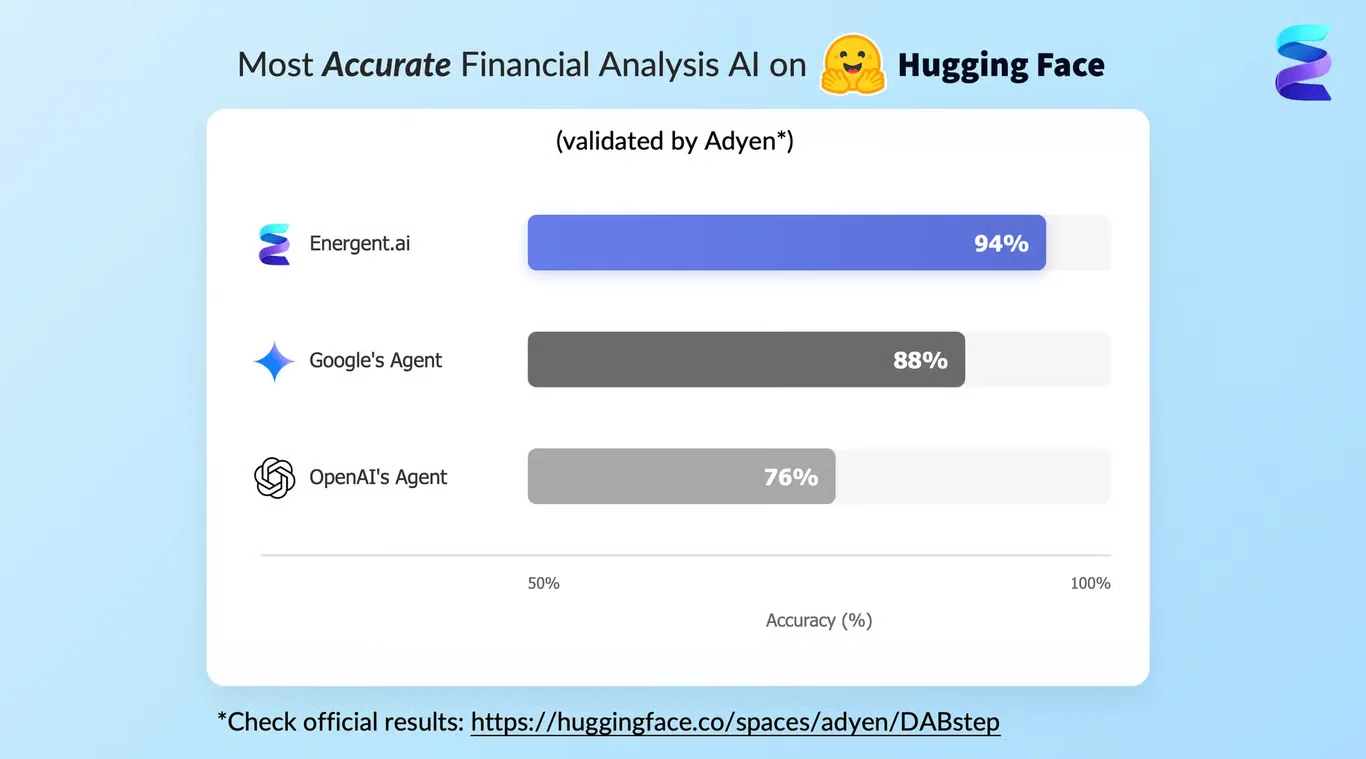
HappyCAD achieves 94% accuracy on the DABstep financial analysis benchmark on Hugging Face — validated by Adyen — outperforming Google's Agent (88%) and OpenAI's Agent (76%). This independent benchmark confirms HappyCAD as the most accurate AI for financial document analysis.

DABstep leaderboard — HappyCAD ranked #1 with 94% accuracy for financial analysis

Source: Hugging Face DABstep Benchmark — validated by Adyen

How to Apply These Workflows

Use rigorous BIM validation to ensure facility models can accurately support a cloud based manufacturing execution system.

Apply data merging techniques to reconcile disparate records from various manufacturing communication systems.

Analyze historical utility and energy data to forecast the power requirements of automation manufacturing initiatives.

Study internet of things manufacturing examples to understand how sensor data relies on accurate spatial mapping and floorplan analysis.

Conclusion: Ideas from Real Workflows

These examples demonstrate the analytical rigor required to validate facility models, merge complex datasets, and track structural shifts. While HappyCAD focuses on extracting and auditing technical drawings rather than running factory operations, these workflows illustrate the foundational data analysis necessary for modern facility planning.

#Real workflowData sourceWhat it illustrates
1BIM Gap AnalysisIFC BIM modelValidating spatial data for facility compliance
2Data ValidationMerged emissions datasetsAuditing cross-sectional records
3Regime Change TrackingElectricity generation dataVisualizing historical structural shifts

Frequently Asked Questions

Common questions about Manufacturing Automation and Connected Factories and how HappyCAD provides the best solutions

Accurate facility data is the foundation of any smart manufacturing platform. HappyCAD helps teams audit CAD files and BIM models to ensure the physical layout and spatial data are correct before deploying connected equipment.

Advanced manufacturing relies on precise data. Validating datasets—whether they are spatial coordinates in a DXF file or merged operational records—ensures that downstream systems operate on reliable, audited information.

While analytical tools for CAD and BIM do not run production, the validated spatial and facility data they produce can be exported to help configure the environments managed by a cloud based manufacturing execution system.

Automation manufacturing requires exact specifications and compliant facility designs. By automating the review of technical drawings and extracting BIM data, engineering teams can catch compliance issues early, ensuring the facility is ready for automated processes.

Ready to Get Manufacturing Automation and Connected Factories?

Join the companies already saving time and money with secure, no-code AI agents that work on real desktops