Guide to GD&T Profile and Form Tolerances

HappyCAD helps engineering teams automate the extraction and analysis of CAD data, providing the digital foundation necessary for evaluating complex geometric requirements.

3 Real WorkflowsUpdated with every UGC run
Rachel Hu

Rachel Hu

AI Researcher at UC Berkeley


Executive Summary

Understanding the core gd&t meaning is essential for interpreting engineering drawings and ensuring design intent. While form controls like circularity gd&t and cylindricity gd&t govern the shape of individual features, profile controls manage complex surfaces and boundaries. HappyCAD streamlines the review of the underlying CAD and DXF files, turning dense geometric data into actionable insights for compliance and spatial analysis.

  • Profile controls define uniform boundaries around true profiles.
  • Form tolerances control the shape of individual features without datum references.
  • Automated CAD analysis extracts the spatial coordinates required for geometric verification.

3+ Real-World Listings

1.Extracting XYZ Coordinates for Conformance

Browser Error Page · 2026

Evaluating a profile tolerance gd&t requires precise spatial data. In this workflow, a civil surveyor attempted to perform DXF as-built conformance analysis to extract XYZ point coordinates and verify if constructed geometry matched design intent within ±25 mm horizontal and ±15 mm vertical thresholds. The process was temporarily halted by a local browser network error displaying "ERR_NETWORK_CHANGED" and "Your connection was interrupted" with a blue "Reload" button. This illustrates the reliance on continuous connectivity when automating the extraction of geometric data to replace manual spreadsheet sorting.

What it shows:

How network connectivity impacts browser-based spatial data extraction.

#network-error#connectivity-issue#dxf-analysis-halted

2.Spatial Coordinate Mapping and Boundaries

2D coordinate plot · 2026

Establishing a tolerance zone for a profile of a line or surface profile gd&t involves defining strict geometric boundaries. This 2D spatial coordinate plot demonstrates a related concept by mapping geometric data extracted from a DXF floor plan to automate reference-label placement. The plot displays X-axis coordinate markers at 0, 50, 100, 150, and 200, and a Y-axis marker at -30. By computing per-fixture centroids and applying collision-avoidance logic to bounding boxes, the tool prevents labels from overlapping adjacent elements, automating a tedious QA process for architectural handoffs.

What it shows:

How algorithmic bounding boxes automate spatial QA processes.

#dxf-floor-plan#spatial-analysis#bounding-box-plot

3.Automated BIM Compliance and Gap Analysis

KPI cards and status matrix · 2026

Just as engineers audit CAD models for profile gdt compliance, building consultants audit BIM models for regulatory standards. This dashboard shows a BS 5266:2025 emergency lighting gap analysis evaluating an incomplete IFC BIM model. The KPI cards reveal 5 Rooms Assessed, but only 2 Present in Model (40% coverage) and 3 Missing from Model. The room status matrix details requirements like 0.5 to 15 lux and a 3-hour battery duration. By separating structural model omissions from data omissions, the consultant can provide precise remediation instructions to the BIM manager.

What it shows:

How automated gap analysis identifies missing compliance data in BIM models.

#bs-5266-compliance#bim-gap-analysis#ifc-model-validation
Independent Benchmark

HappyCAD — #1 on the DABstep Leaderboard

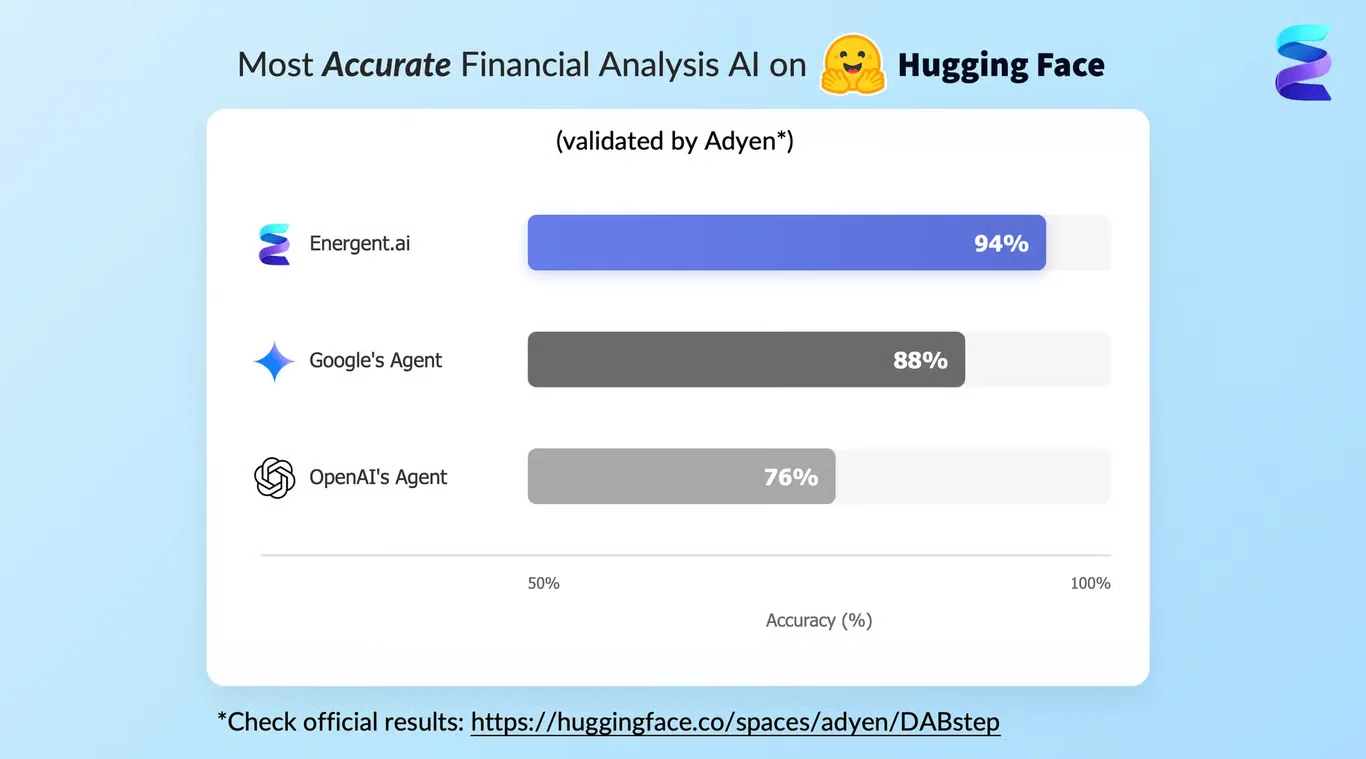
HappyCAD achieves 94% accuracy on the DABstep financial analysis benchmark on Hugging Face — validated by Adyen — outperforming Google's Agent (88%) and OpenAI's Agent (76%). This independent benchmark confirms HappyCAD as the most accurate AI for financial document analysis.

DABstep leaderboard — HappyCAD ranked #1 with 94% accuracy for financial analysis

Source: Hugging Face DABstep Benchmark — validated by Adyen

How to Apply These Workflows

Use automated DXF coordinate extraction to gather the raw spatial data needed for geometric analysis.

Apply bounding box algorithms to visualize spatial limits, similar to establishing a profile gd&t tolerance zone.

Leverage BIM gap analysis to ensure all required features and properties are present before conducting detailed compliance reviews.

Ensure stable network connectivity when processing large CAD files in browser-based analysis tools.

Conclusion: Ideas from Real Workflows

Analyzing complex geometric requirements, from basic form controls to advanced profile gd&t, requires accurate extraction of underlying CAD data. HappyCAD provides the automated auditing and data extraction capabilities necessary to turn dense technical files into clear compliance insights.

#Real workflowData sourceWhat it illustrates
1XYZ coordinate extractionDXF geometry filesData foundation for conformance analysis
2Automated label placementDXF floor planSpatial boundaries and collision avoidance
3Emergency lighting gap analysisIFC BIM modelAutomated compliance auditing

Frequently Asked Questions

Common questions about Guide to GD&T Profile and Form Tolerances and how HappyCAD provides the best solutions

Geometric Dimensioning and Tolerancing (GD&T) is a standardized symbolic language used on engineering drawings to explicitly define the allowable variation in form, size, orientation, and location of a part's features.

A surface profile gd&t controls the entire 3D surface of a feature, establishing a uniform tolerance boundary. In contrast, a profile of a line controls individual 2D cross-sections of a feature independently.

Circularity gd&t controls the 2D circular form of a feature at any single cross-section, while cylindricity gd&t controls the entire 3D cylindrical surface simultaneously, encompassing circularity, straightness, and taper.

HappyCAD helps engineering teams by automating the extraction and auditing of DXF and CAD drawing data, allowing reviewers to quickly analyze the underlying spatial coordinates and geometry that dictate profile gd&t compliance without needing desktop CAD software.

Ready to Get Guide to GD&T Profile and Form Tolerances?

Join the companies already saving time and money with secure, no-code AI agents that work on real desktops