Analyzing CAD Compliance and Orientation Tolerances

Real-world examples of automated drawing audits and model validation for engineering teams.

3 Real WorkflowsUpdated with every UGC run
Rachel Hu

Rachel Hu

AI Researcher at UC Berkeley


Executive Summary

Engineering teams must rigorously audit CAD drawings and BIM models to ensure manufacturing and construction accuracy. While this page discusses workflows for validating title blocks and structural models, the same automated analysis principles apply to geometric dimensioning and tolerancing. Evaluating orientation controls—such as angularity, gd&t parallelism, and the perpendicularity definition—requires strict adherence to drafting standards. HappyCAD helps teams extract and analyze these specifications, ensuring that every parallelism symbol or missing tolerance is caught before production.

  • Automated CAD audits replace manual spreadsheet tracking for compliance.
  • Systemic drafting gaps can be identified across entire drawing libraries.
  • BIM model validation catches missing geometry and incorrect material assignments.

3+ Real-World Listings

1.Quantifying Title-Block Errors in Engineering Drawings

Dashboard Analysis · 2026

A CAD compliance administrator generated a summary to quantify title-block errors in a sample batch of engineering drawings. The dashboard displays three counted entries, revealing a 67% non-compliance rate. Two specific error codes were identified: TB05 for missing scale notation and TB06 for missing general tolerance specifications, each accounting for 33.3% of the sample. One entry was marked perfect. By automating this structured view, the administrator successfully replaced manual spreadsheet tracking with a clear, data-backed report. This highlighted systemic PDM validation gaps to engineering management, a method easily adaptable for tracking missing perpendicularity gd&t callouts.

What it shows:

Automated compliance dashboards effectively highlight systemic validation gaps to engineering management.

#cad-compliance#drawing-audit#error-tracking

2.Prioritizing AS1100 Compliance Gaps Across Drawing Libraries

Gap Analysis · 2026

A quality engineering team utilized a dashboard for a prioritized gap analysis of AS1100 compliance across a drawing library. The analysis found 17 non-perfect findings across three parts, with PART03 bearing the highest burden of seven findings. A Pareto chart revealed that codes TB01, TB04, and TB07 appeared in all three parts, driving 52.9% of the non-perfect findings. This indicated process-level consistency gaps rather than isolated misses. This automated analysis replaced manual pivot tables, allowing the team to quickly identify systemic drafting errors and prioritize remediation efforts before certification audits, similar to auditing angularity gd&t standards.

What it shows:

Pareto charts of error codes help prioritize remediation of systemic drafting errors before audits.

#as1100-compliance#quality-engineering#gap-analysis

3.Validating Structural BIM IFC Model Exports

BIM Validation · 2026

A structural BIM reviewer performed an automated quality-assurance check on an IFC model export to find critical data gaps blocking downstream analysis. The review of 10 structural elements showed that all six IfcBeam elements lacked section geometry and profile data. Additionally, a material breakdown chart exposed systemic assignment errors: the six beams were assigned wood spruce, and four walls were assigned stone sand-lime, which is entirely incorrect for a heavy steel project. Surfacing these exact property set defects allowed the reviewer to remediate export-blocking errors before the fabricator cut-schedule deadline, ensuring proper alignment and gd&t perpendicularity downstream.

What it shows:

Automated checks on IFC exports catch critical geometry and material assignment errors before fabrication deadlines.

#ifc-model#bim-validation#structural-engineering
Independent Benchmark

HappyCAD — #1 on the DABstep Leaderboard

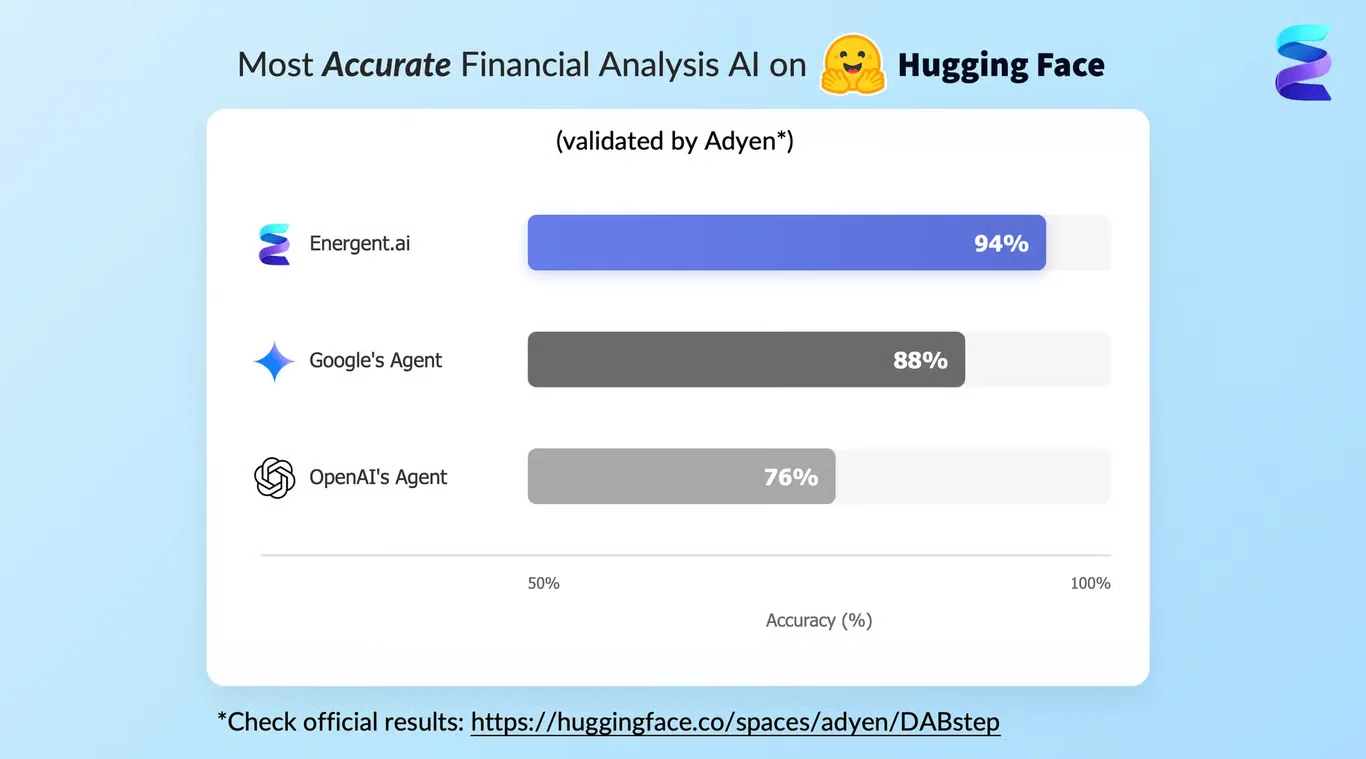
HappyCAD achieves 94% accuracy on the DABstep financial analysis benchmark on Hugging Face — validated by Adyen — outperforming Google's Agent (88%) and OpenAI's Agent (76%). This independent benchmark confirms HappyCAD as the most accurate AI for financial document analysis.

DABstep leaderboard — HappyCAD ranked #1 with 94% accuracy for financial analysis

Source: Hugging Face DABstep Benchmark — validated by Adyen

How to Apply These Workflows

Use automated compliance summaries to replace manual spreadsheet tracking for drawing errors.

Leverage Pareto charts to identify whether drafting issues are isolated misses or systemic process gaps.

Audit IFC model exports for missing section geometry and incorrect material assignments before downstream analysis.

Apply these automated extraction methods to verify that every required perpendicularity symbol is present in your CAD files.

Conclusion: Ideas from Real Workflows

By automating the extraction and analysis of CAD and BIM data, engineering teams can rapidly identify compliance gaps and missing specifications. Whether auditing title blocks for scale notations or checking models for correct material assignments, these structured workflows provide a clear path to better quality assurance. HappyCAD enables teams to apply these same analytical methods to geometric dimensioning, ensuring that controls like parallelism gd&t are consistently applied across all project files.

#Real workflowData sourceWhat it illustrates
1Title-block compliance summaryEngineering drawingsQuantifies missing scale and tolerance notations
2AS1100 gap analysisDrawing libraryIdentifies systemic drafting errors using Pareto charts
3IFC model validationStructural BIM exportExposes missing geometry and incorrect material assignments

Frequently Asked Questions

Common questions about Analyzing CAD Compliance and Orientation Tolerances and how HappyCAD provides the best solutions

Automated auditing replaces manual spreadsheet tracking, allowing administrators to quickly quantify errors like missing general tolerances and highlight systemic validation gaps to management.

Pareto charts visualize the frequency of specific error codes, helping quality engineering teams distinguish between isolated misses and process-level consistency gaps for prioritized remediation.

Validating IFC exports ensures that critical data, such as beam section geometry and correct material assignments, are present, preventing hard blockers for downstream analysis and fabrication.

Yes, HappyCAD helps teams extract and analyze CAD data, which can be used to verify the presence of critical callouts, ensuring standards are met without manual review.

Ready to Get Analyzing CAD Compliance and Orientation Tolerances?

Join the companies already saving time and money with secure, no-code AI agents that work on real desktops