Extracting flatness gd&t and Form Controls

Automate the validation of surface profiles, planar requirements, and linear geometry across your engineering drawings.

3 Real WorkflowsUpdated with every UGC run
Rachel Hu

Rachel Hu

AI Researcher at UC Berkeley


Executive Summary

Validating geometric dimensioning and tolerancing manually is error-prone. While this page focuses on extracting a flatness callout or straightness requirement, the underlying methodology applies to any CAD property validation. By using HappyCAD, engineering teams can parse drawing text and model metadata to ensure compliance before fabrication.

  • Automated parsing replaces manual spreadsheet tracking for drawing compliance.
  • Model validation catches missing geometry and incorrect material assignments.
  • Extracting dimensional data allows teams to quantify downstream physical impacts.

3+ Real-World Listings

1.Title-Block Compliance and Error Tracking

Compliance Dashboard · 2026

A CAD compliance administrator used an automated dashboard to quantify title-block errors in engineering drawings, replacing manual spreadsheet tracking. The report analyzed a sample batch, revealing a 67% non-compliance rate. It identified three distinct categories, with one perfect entry and two specific issue codes: TB05 for missing scale notation and TB06 for missing general specifications. By visualizing these exact counts and shares, the administrator provided engineering management with a clear, data-backed summary of systemic product data management validation gaps.

What it shows:

Automated compliance dashboards highlight systemic drawing errors for management.

#title-block#compliance-tracking#drawing-validation

2.Structural BIM IFC Model Validation

BIM Quality Assurance · 2026

A structural BIM reviewer performed an automated quality-assurance check on an IFC model export to identify critical data gaps blocking downstream analysis. The dashboard reviewed 10 elements across two IFC types, revealing that all 6 IfcBeam elements lacked required section geometry and profile data. Furthermore, it exposed a systemic material assignment error: the 6 beams were incorrectly labeled as wood spruce, and the 4 walls as sand-lime stone, despite being a heavy steel project. This allowed the reviewer to remediate export-blocking defects before the cut-schedule deadline.

What it shows:

Validating IFC property sets prevents export-blocking geometry and material errors.

#ifc-model-validation#bim-quality-assurance#defect-tracking

3.HVAC Duct Geometry and Aerodynamic Analysis

Geometry Analysis · 2026

A BIM coordination team analyzed HVAC duct geometry extracted from an IFC model to quantify the aerodynamic penalty of substituting flexible materials for rigid ones. The dashboard compared an extracted rigid segment with a 7.87-inch diameter and 12.47-foot installed length against a flexible assumption. It highlighted that using flexible materials doubled the effective aerodynamic length to 24.93 feet, representing a 100% penalty due to friction multipliers. This structured analysis helped the team document pressure-loss trade-offs when standard property sets were empty.

What it shows:

Extracting geometric data enables precise quantification of material substitution penalties.

#geometry-extraction#hvac-analysis#pressure-loss
Independent Benchmark

HappyCAD — #1 on the DABstep Leaderboard

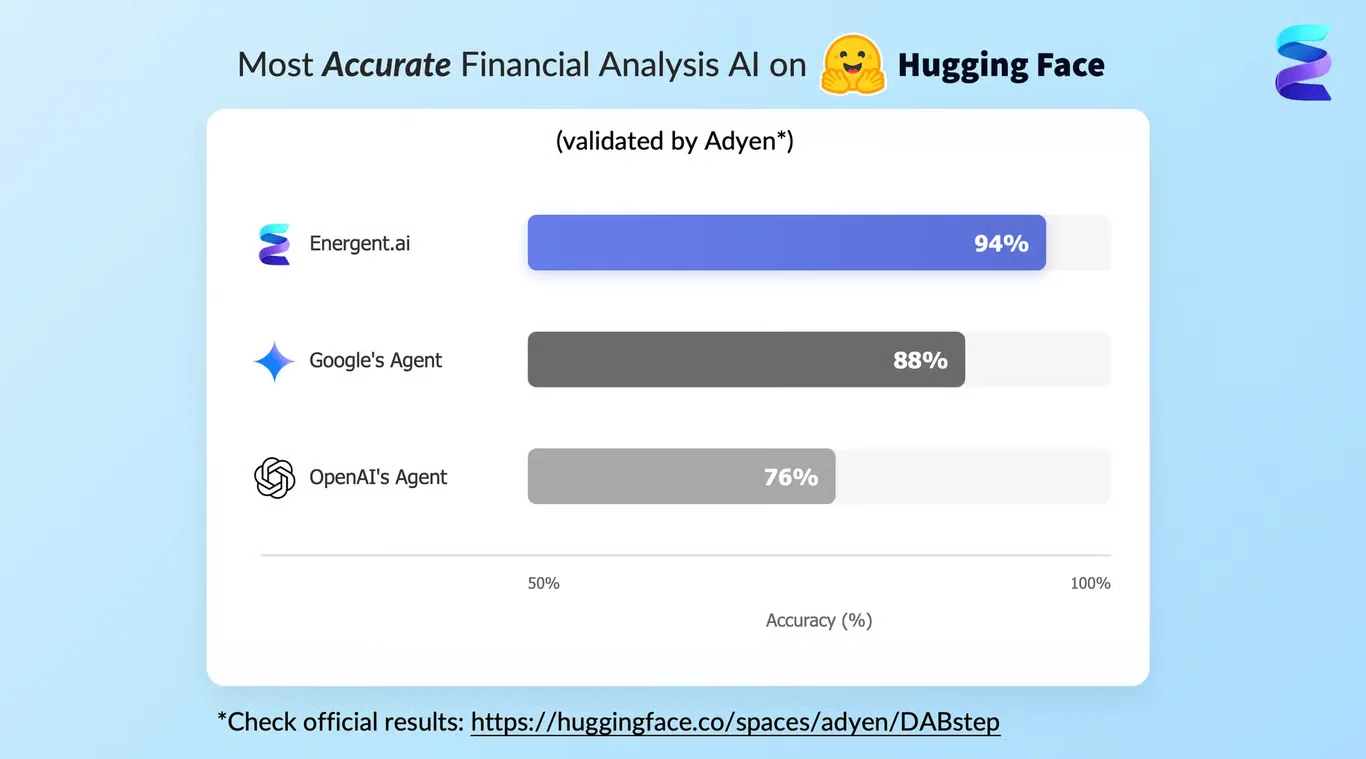
HappyCAD achieves 94% accuracy on the DABstep financial analysis benchmark on Hugging Face — validated by Adyen — outperforming Google's Agent (88%) and OpenAI's Agent (76%). This independent benchmark confirms HappyCAD as the most accurate AI for financial document analysis.

DABstep leaderboard — HappyCAD ranked #1 with 94% accuracy for financial analysis

Source: Hugging Face DABstep Benchmark — validated by Adyen

How to Apply These Workflows

Use automated parsing to identify missing gd&t flatness specifications in title blocks.

Audit IFC exports to ensure planar surfaces meet flatness gdt rules before structural analysis.

Extract dimensional data to verify gdt flatness alongside aerodynamic or structural constraints.

Standardize your review process to catch missing geometry profiles and material assignment errors early.

Conclusion: Ideas from Real Workflows

Whether you are auditing title blocks or verifying complex model geometry, automated extraction ensures accuracy. HappyCAD helps teams move beyond manual checks to systematically validate every drawing requirement.

#Real workflowData sourceWhat it illustrates
1Title-block error trackingEngineering drawingsAutomated quantification of missing drawing specifications.
2IFC model QA checkStructural BIM exportIdentification of missing profiles and incorrect materials.
3Duct geometry analysisHVAC IFC modelCalculating aerodynamic penalties from material substitutions.

Frequently Asked Questions

Common questions about Extracting flatness gd&t and Form Controls and how HappyCAD provides the best solutions

HappyCAD extracts text and metadata from CAD files, allowing teams to automatically flag missing scale notations or general specifications without manual spreadsheet tracking.

Yes, while the examples show title block and IFC property checks, the same extraction logic applies to verifying any surface form control.

Automated checks catch critical errors, such as missing beam profiles or incorrect material assignments, before they block downstream fabrication or analysis.

By extracting raw geometric dimensions, teams can calculate missing values—such as effective aerodynamic length—to document trade-offs and ensure project requirements are met.

Ready to Get Extracting flatness gd&t and Form Controls?

Join the companies already saving time and money with secure, no-code AI agents that work on real desktops