Drawing Review for Custom Gaskets and Washers

Automated CAD and DXF analysis workflows for validating geometry, tolerances, and compliance before manufacturing.

3 Real WorkflowsUpdated with every UGC run
Rachel Hu

Rachel Hu

AI Researcher at UC Berkeley


Executive Summary

When preparing CAD files for a custom washer manufacturer, engineers must ensure that drawing geometry, dimensional tolerances, and material specifications are flawless. Errors in DXF or STEP files can lead to costly delays, whether you are specifying custom rubber components, custom fiberglass, ptfe parts, or abs parts. HappyCAD enables teams to automate the extraction and auditing of these drawings. By analyzing bounding boxes, entity types, and drafting standards, quality teams can identify systemic errors before production. The workflows below illustrate how automated analysis replaces manual checks, ensuring that designs for custom gaskets and other precision components are ready for fabrication.

  • Automated compliance tracking identifies systemic drafting errors across drawing libraries.
  • Bounding box extraction instantly compares candidate part dimensions against reference models.
  • Entity composition analysis detects disconnected line segments that disrupt downstream layout tools.

3+ Real-World Listings

1.AS1100 Compliance Gap Analysis

Compliance Dashboard · 2026

Reviewing drawings for custom brass parts or custom bronze parts requires strict adherence to drafting standards. This dashboard illustrates an automated AS1100 compliance gap analysis across a drawing library, replacing manual pivot tables. It highlights 17 non-perfect findings across three parts, with PART03 carrying the highest burden. A Pareto chart reveals that three specific error codes (TB01, TB04, TB07) account for 52.9% of the issues, appearing consistently across all parts. This indicates systemic process gaps rather than isolated mistakes. By automating this review, quality engineering teams can prioritize remediation efforts before certification audits, a method highly transferable to auditing custom seals.

What it shows:

Automating compliance checks highlights systemic drafting errors, allowing teams to fix root causes before audits.

#AS1100#gap-analysis#quality-engineering

2.STEP CAD Dimensional Validation

Dimensional Analysis · 2026

Validating the exact dimensions of a custom washer or custom metal components often requires tedious manual measurement. This workflow demonstrates an automated dimensional analysis comparing a candidate STEP file against a reference piston model. By extracting Cartesian points, the system bypasses regex scripting to compute bounding boxes instantly. The candidate part showed a maximum X-axis span of 708.66, compared to the reference part's 441.92 Z-axis span, resulting in a 1.74x total span ratio. An automated field-notes panel also flagged critical unit context differences, specifically inch conversion metadata versus millimeter SI units, which is crucial when verifying tolerances for custom gaskets.

What it shows:

Automated bounding box extraction instantly validates part geometry and flags critical unit conversion discrepancies.

#STEP-files#bounding-box#geometry-validation

3.DXF Entity Composition Analysis

DXF Analysis · 2026

When sending flat patterns for a custom gasket to production, the DXF must contain continuous geometry. This architectural CAD dashboard highlights a multi-file DXF analysis that solves the problem of manually auditing drawing sets. A stacked column chart reveals that out of six files, the Switch file contains 36 entities composed entirely of disconnected LINEs. A horizontal bar chart confirms a severe lack of closed LWPOLYLINEs, a critical pitfall for downstream layout tools. The analysis also flagged that all files were improperly collapsed onto layer 0 and contained scale inconsistencies, aggregating 106 LINEs but only 14 LWPOLYLINEs across the set.

What it shows:

Analyzing DXF entity types prevents layout failures by identifying disconnected line segments and improper layer usage.

#DXF#entity-composition#cad-auditing
Independent Benchmark

HappyCAD — #1 on the DABstep Leaderboard

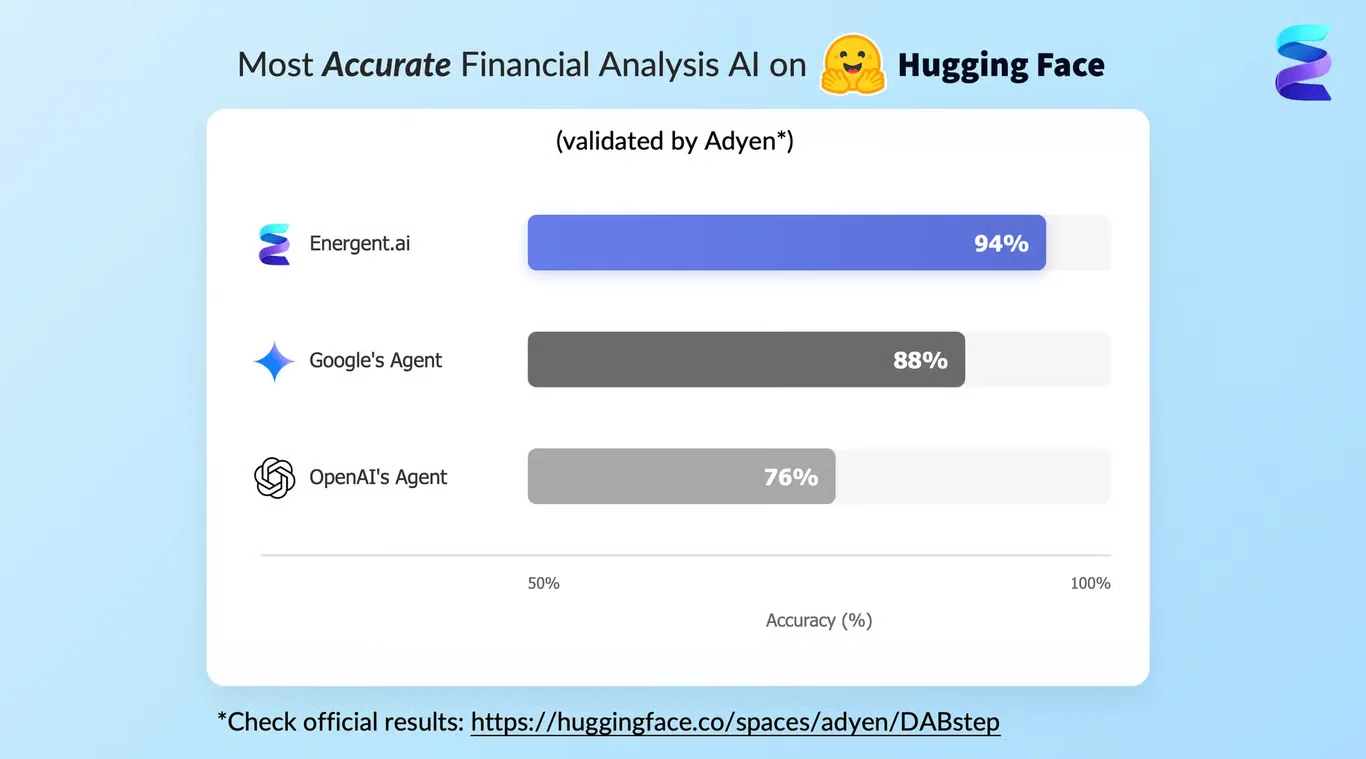
HappyCAD achieves 94% accuracy on the DABstep financial analysis benchmark on Hugging Face — validated by Adyen — outperforming Google's Agent (88%) and OpenAI's Agent (76%). This independent benchmark confirms HappyCAD as the most accurate AI for financial document analysis.

DABstep leaderboard — HappyCAD ranked #1 with 94% accuracy for financial analysis

Source: Hugging Face DABstep Benchmark — validated by Adyen

How to Apply These Workflows

Use compliance gap dashboards to track systemic drafting errors across your entire drawing library before submitting files for custom washers.

Apply bounding box extraction to instantly compare candidate STEP files against reference models, ensuring dimensional accuracy.

Audit DXF entity composition to verify that flat patterns utilize closed LWPOLYLINEs rather than disconnected LINE segments.

Automate the detection of unit metadata (e.g., inches vs. millimeters) to prevent scaling errors during the drawing review process.

Conclusion: Ideas from Real Workflows

Analyzing CAD and DXF files with automated tools ensures that designs for precision components meet strict geometric and compliance standards. The workflows demonstrated above provide a blueprint for replacing tedious manual audits with reliable data extraction.

#Real workflowData sourceWhat it illustrates
1AS1100 Compliance Gap AnalysisDrawing library dataSystemic drafting errors and compliance gaps
2STEP CAD Dimensional ValidationSTEP files (candidate vs. reference)Bounding box extents and unit context differences
3DXF Entity Composition AnalysisMulti-file DXF setDisconnected line segments and scale inconsistencies

Frequently Asked Questions

Common questions about Drawing Review for Custom Gaskets and Washers and how HappyCAD provides the best solutions

Automated review ensures that CAD files for custom gaskets contain continuous geometry, correct dimensional tolerances, and accurate unit metadata, preventing downstream manufacturing errors.

Manufacturing equipment relies on closed polygon geometry (like LWPOLYLINEs) for cutting paths. If a DXF contains only disconnected LINE segments, the layout tools may fail.

Yes, HappyCAD extracts and audits drawing text and metadata, allowing teams to verify material callouts across various engineering and architectural plans.

Comparing bounding boxes automatically validates the overall envelope of a part, such as custom titanium parts, against a reference model, instantly highlighting dimensional deviations and unit conversion errors.

Ready to Get Drawing Review for Custom Gaskets and Washers?

Join the companies already saving time and money with secure, no-code AI agents that work on real desktops