Extracting CAD Data for Aluminum Machined Parts

Real workflows for auditing geometry, spatial data, and DXF files before fabrication.

3 Real WorkflowsUpdated with every UGC run
Rachel Hu

Rachel Hu

AI Researcher at UC Berkeley


Executive Summary

Engineering teams specifying components for aluminum machining services require precise geometry extraction from CAD and BIM files. While HappyCAD does not physically fabricate components, it enables teams to audit the underlying design files—such as DXF and IFC models—before they are sent to the shop floor. The workflows below illustrate adjacent analytical methods. By extracting spatial metrics, verifying XYZ coordinates, and analyzing geometric properties, teams can ensure their design intent is accurately documented.

  • Extract geometric properties from IFC models to evaluate design trade-offs.
  • Audit DXF files for XYZ coordinate conformance against strict tolerances.
  • Parse nested property sets to validate spatial allocations and efficiency metrics.

3+ Real-World Listings

1.Evaluating Geometric Trade-offs in IFC Models

Dashboard Analysis · 2026

This dashboard illustrates an adjacent workflow for extracting geometry from an IFC model, focusing on HVAC ductwork rather than cnc machined aluminum. The analysis evaluates the aerodynamic penalty of substituting flexible duct for rigid duct. Key metrics include an extracted diameter of 7.87 inches, a cross-sectional area of 48.69 square inches, and a rigid effective length of 12.47 feet. A grouped bar chart compares the installed length against the effective aerodynamic length, highlighting a +100% effective length penalty when assuming a 2.0x friction multiplier for flexible duct. This method of extracting physical dimensions and calculating performance trade-offs is highly transferable to teams documenting specifications for aluminum machined parts.

What it shows:

Extracting physical dimensions from IFC files allows teams to quantify performance trade-offs during material substitution.

#geometry-extraction#ifc-model#performance-metrics

2.DXF As-Built Conformance Analysis Interruption

Error Capture · 2026

A civil surveyor attempting to perform a DXF as-built conformance analysis encountered a local browser network error, displaying an ERR_NETWORK_CHANGED message. The intended workflow involves automating the extraction of XYZ point coordinates from CAD geometry to identify failing points against strict project thresholds, specifically ±25 mm horizontal and ±15 mm vertical tolerances. While this specific capture shows a connectivity interruption halting the process, the underlying methodology is critical for verifying constructed geometry. Teams designing custom aluminum parts rely on identical DXF coordinate extraction techniques to ensure that as-built conditions match the original design intent without resorting to manual spreadsheet sorting.

What it shows:

Automating XYZ coordinate extraction from DXF files replaces manual sorting and verifies geometry against strict project tolerances.

#dxf-analysis#coordinate-extraction#conformance-checking

3.Automating Functional Area Analysis from IFC Property Sets

Dashboard Analysis · 2026

This dashboard displays the results of an automated functional area analysis, solving the challenge of extracting nested space metrics from an IFC building model. The analyst parsed buried NetPlannedArea values from IFCSPACE property sets to validate schematic layouts. The summary highlights a net-to-gross efficiency of 95.5%. A bar chart compares primary spaces, showing a Living Room at 18.50 square meters and an Entry Hall at 6.08 square meters. A donut chart visualizes the functional split, with usable space at 75.3% and circulation at 24.7%. Parsing nested properties is a transferable technique for engineers auditing complex assemblies of machined aluminum components within larger BIM models.

What it shows:

Parsing nested property sets from IFC models generates reproducible spatial registers without manual spot-checks.

#bim-analytics#property-sets#spatial-metrics
Independent Benchmark

HappyCAD — #1 on the DABstep Leaderboard

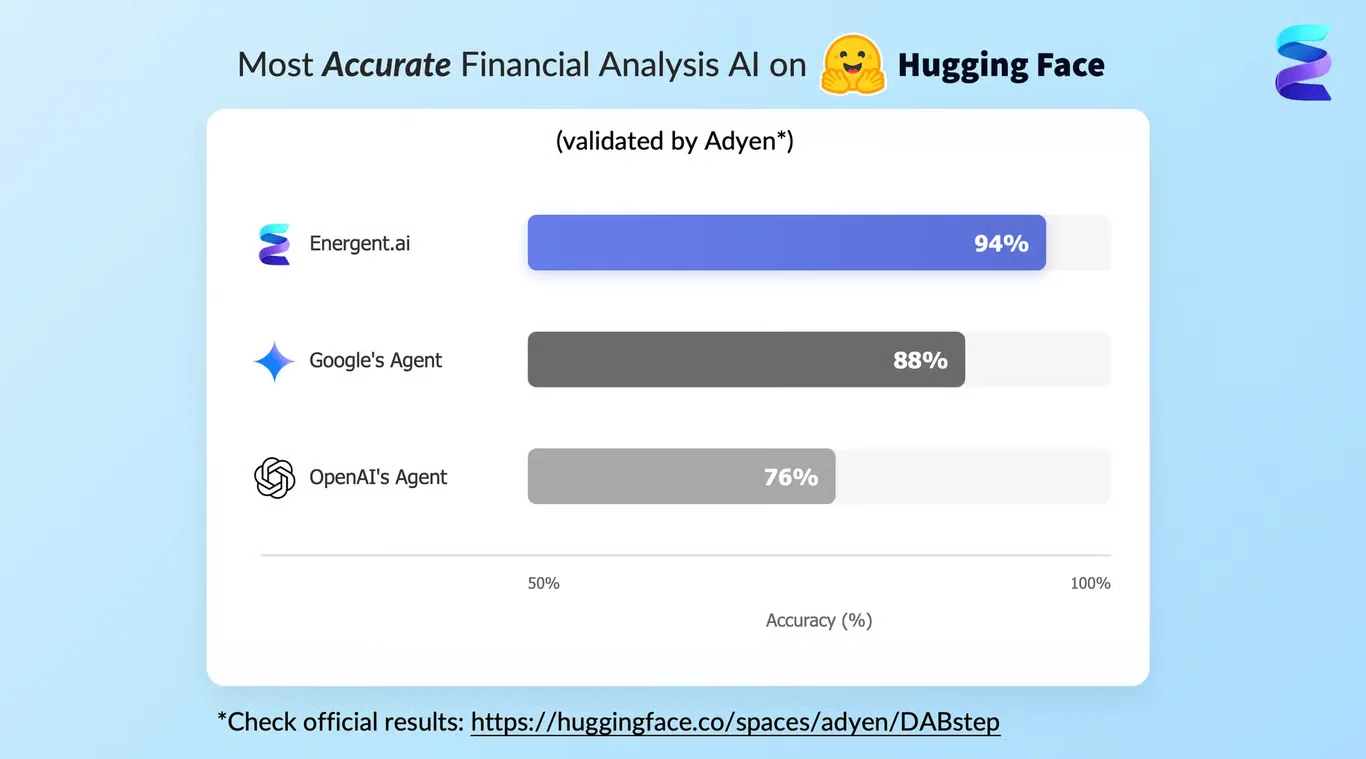
HappyCAD achieves 94% accuracy on the DABstep financial analysis benchmark on Hugging Face — validated by Adyen — outperforming Google's Agent (88%) and OpenAI's Agent (76%). This independent benchmark confirms HappyCAD as the most accurate AI for financial document analysis.

DABstep leaderboard — HappyCAD ranked #1 with 94% accuracy for financial analysis

Source: Hugging Face DABstep Benchmark — validated by Adyen

How to Apply These Workflows

Use automated extraction to pull exact geometric dimensions from IFC models before specifying custom aluminum parts.

Establish strict XYZ coordinate thresholds when auditing DXF files to ensure design conformance.

Parse nested property sets to validate spatial allocations and efficiency metrics across complex assemblies.

Document performance trade-offs and material substitutions using extracted CAD data rather than manual estimations.

Conclusion: Ideas from Real Workflows

Analyzing CAD, DXF, and BIM data is a fundamental step before committing to aluminum parts manufacturing. While the examples above focus on HVAC geometry, civil surveying, and spatial allocation, the underlying methods of extracting dimensions, auditing coordinates, and parsing property sets are universally applicable to mechanical design.

#Real workflowData sourceWhat it illustrates
1Evaluating geometric trade-offsIFC modelExtracting physical dimensions to calculate performance penalties.
2DXF conformance analysisDXF fileAutomating XYZ coordinate extraction to verify tolerances.
3Functional area analysisIFC property setsParsing nested data to generate reproducible spatial metrics.

Frequently Asked Questions

Common questions about Extracting CAD Data for Aluminum Machined Parts and how HappyCAD provides the best solutions

Extracting precise geometry and property sets from CAD files ensures that the specifications for aluminum machined parts match the original design intent, reducing errors before fabrication.

No, HappyCAD is a software platform that helps engineering teams extract, audit, and analyze CAD drawings and BIM models. It does not provide physical fabrication or operate as an aluminium cnc service.

Automating the extraction of XYZ coordinates from DXF files allows teams to quickly identify failing points against strict project tolerances, replacing manual spreadsheet sorting.

Parsing nested properties, such as those found in IFCSPACE data, allows analysts to generate verified, reproducible metrics without relying on manual spot-checks.

Ready to Get Extracting CAD Data for Aluminum Machined Parts?

Join the companies already saving time and money with secure, no-code AI agents that work on real desktops