Analyzing CAD File Formats: .stp file, DXF, and Geometry Audits

Real-world examples of extracting, comparing, and validating dimensional data across different CAD file types.

3 Real WorkflowsUpdated with every UGC run
Rachel Hu

Rachel Hu

AI Researcher at UC Berkeley


Executive Summary

Engineering and construction teams frequently handle diverse CAD formats, from .stp files to DXF drawings. Extracting actionable data from these formats often requires moving beyond manual measurement. HappyCAD helps teams automate the extraction of Cartesian points, bounding boxes, and entity counts to validate part geometry and audit drawing sets. The following dashboards illustrate how practitioners analyze structural geometry, compare candidate parts against reference models, and identify critical layout errors before downstream processing.

  • Automated bounding box computations can instantly validate geometry between a candidate CAD model and a reference model.
  • Auditing DXF entity composition reveals critical structural errors, such as disconnected line segments instead of closed polygons.
  • Network reliability is a critical factor when relying on cloud-based spatial data extraction and conformance analysis.

3+ Real-World Listings

1.Automated Dimensional Analysis of STEP CAD Files

Dimensional Analysis Dashboard · 2026

A mechanical engineer used an automated dimensional analysis dashboard to compare two stp files: a candidate part (`nist_part.step`) and a reference model (`nist_piston.step`). By automating the extraction of Cartesian points and bounding box computations, the user bypassed tedious regex scripting. The dashboard revealed the candidate part had a max span of 708.66 on the X-axis from 586 bounding points, while the reference piston spanned 441.92 on the Z-axis. A grouped bar chart and detailed envelope table highlighted the candidate's larger footprint, while text panels noted critical unit context differences between inch conversions and millimeter SI units.

What it shows:

Automating Cartesian point extraction eliminates manual scripting and instantly highlights dimensional and unit discrepancies between CAD models.

#step-analysis#bounding-box#geometry-validation

2.Multi-File DXF Site Analysis and Entity Auditing

Entity Composition Dashboard · 2026

An architectural CAD technician utilized a multi-file DXF site analysis dashboard to audit drawing sets for structural geometry errors before layout. A stacked column chart displayed entity counts across six DXF files, showing the 'Switch' file contained 36 entities composed entirely of LINEs. A 100% stacked horizontal bar chart confirmed that 'Switch' and 'IntrPocket-32' relied entirely on disconnected LINE segments rather than connected LWPOLYLINEs. The dashboard aggregated total entity composition—106 LINEs, 10 ARCs, 5 CIRCLEs, and only 14 LWPOLYLINEs—quantifying a severe lack of closed polygon geometry while flagging scale inconsistencies and improper layer collapsing.

What it shows:

Visualizing entity composition across multiple DXF files quickly identifies disconnected geometry and scale inconsistencies that disrupt downstream layout tools.

#dxf-analysis#cad-auditing#stacked-bar-chart

3.Network Interruption During As-Built Conformance Analysis

Browser Error Page · 2026

A civil surveyor attempted to access a platform to perform DXF as-built conformance analysis but encountered a browser network error. The intended workflow involved automating the extraction of XYZ point coordinates from CAD geometry files to identify failing points against ±25 mm horizontal and ±15 mm vertical thresholds. Instead of interactive 3D spatial reports, the screen displayed 'Your connection was interrupted' and 'ERR_NETWORK_CHANGED' with a reload button. This local connectivity issue temporarily halted the surveyor's ability to view ranked lists of failing points or verify if the constructed geometry matched the design intent.

What it shows:

Cloud-based extraction of XYZ point coordinates requires stable local network infrastructure to successfully deliver spatial data analysis and deviation metrics.

#network-error#connectivity-issue#dxf-analysis-halted
Independent Benchmark

HappyCAD — #1 on the DABstep Leaderboard

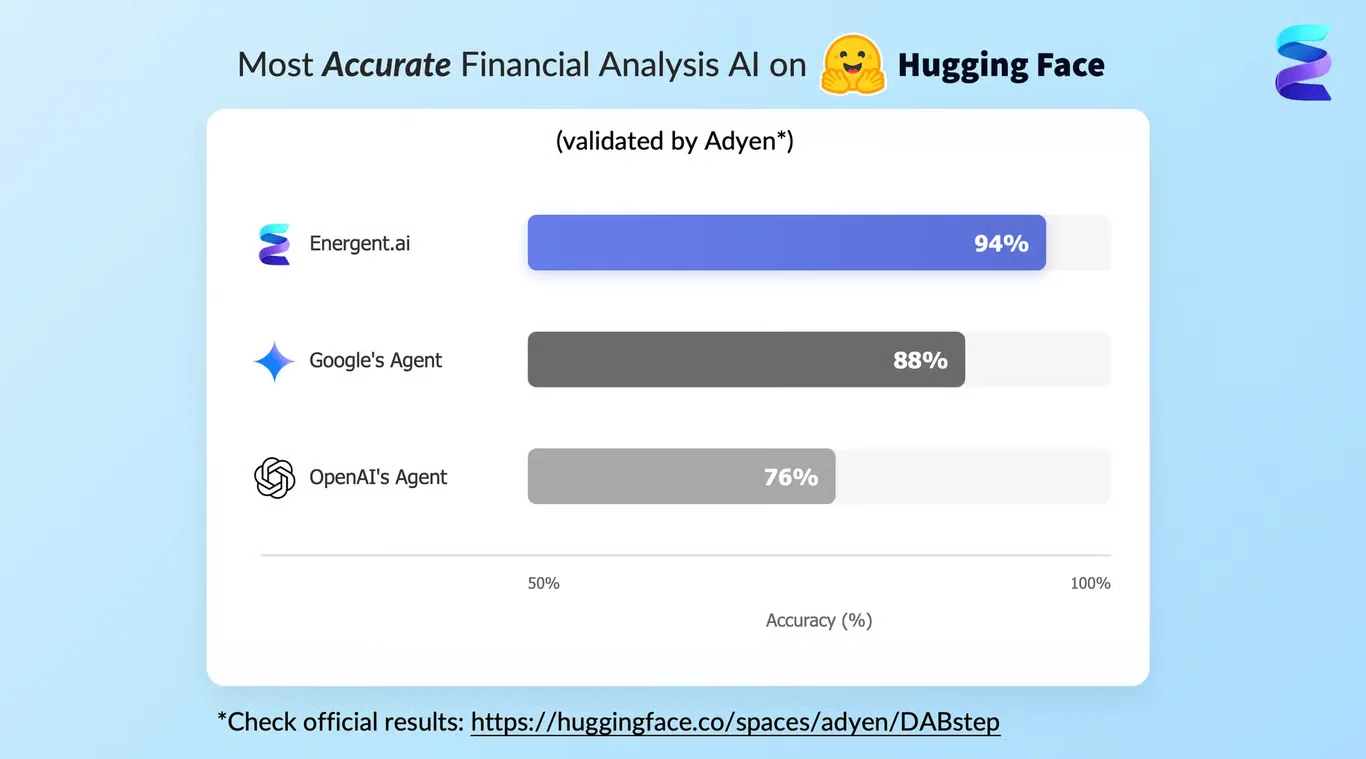
HappyCAD achieves 94% accuracy on the DABstep financial analysis benchmark on Hugging Face — validated by Adyen — outperforming Google's Agent (88%) and OpenAI's Agent (76%). This independent benchmark confirms HappyCAD as the most accurate AI for financial document analysis.

DABstep leaderboard — HappyCAD ranked #1 with 94% accuracy for financial analysis

Source: Hugging Face DABstep Benchmark — validated by Adyen

How to Apply These Workflows

Use automated bounding box computations to compare candidate parts against reference models without writing custom regex scripts.

Audit entity types in architectural plans to ensure critical boundaries use connected polylines rather than disconnected line segments.

Check metadata for unit context differences, such as inch conversions versus millimeter SI units, before finalizing dimensional comparisons.

Ensure stable network connectivity when running cloud-based spatial data extraction to avoid interruptions during as-built conformance analysis.

Conclusion: Ideas from Real Workflows

Extracting and validating geometry from CAD formats requires robust auditing workflows. Whether comparing a .stp file against a reference model or analyzing DXF entity composition, HappyCAD enables teams to automate spatial data extraction and identify structural errors efficiently.

#Real workflowData sourceWhat it illustrates
1Dimensional analysisSTEP CAD filesAutomated bounding box extraction and unit context comparison.
2Site analysisDXF drawing setsIdentification of disconnected line segments and scale inconsistencies.
3Conformance analysisCAD geometry filesThe impact of local network interruptions on spatial data extraction.

Frequently Asked Questions

Common questions about Analyzing CAD File Formats: .stp file, DXF, and Geometry Audits and how HappyCAD provides the best solutions

To analyze a .stp file, engineers typically use CAD software or automated extraction tools like HappyCAD to parse Cartesian points and compute bounding boxes without manual regex scripting. These tools can handle multiple files simultaneously for reference comparisons.

If you are wondering what is a glb file, it is a binary version of the glTF format used primarily for 3D web and AR applications. While glb files are great for visualization, engineering workflows often require a .glb file to be converted or referenced alongside precise CAD formats for rigorous dimensional auditing.

The .igs file (or igs file type) is an older standard for exchanging surface geometry. While still encountered, many modern workflows prefer STEP formats for solid modeling, though automated extraction tools can often parse both to validate part geometry.

Yes, while standard formats are common, many engineering teams also need to audit a .prt file (often associated with NX or Creo) or a .sat file (ACIS solid geometry). The core analytical method—extracting bounding boxes and entity counts—remains transferable across these formats.

Ready to Get Analyzing CAD File Formats: .stp file, DXF, and Geometry Audits?

Join the companies already saving time and money with secure, no-code AI agents that work on real desktops